Skip to content

Ordered before 13:00, shipped the same dayFree shipping from €59A little gift with every order

Ordered before 13:00, shipped the same day

Country and language
Country
Language

Prices in euros, including VAT. Shipping costs are shown at checkout.

Your cart

Your cart is empty

Not sure what you need? Start with other athletes' favourites.

Shop all sports nutrition

Other athletes also bought:

Amacx Drink Gel Try-out Pack with five gels in all flavours
Sale price€8,99 Regular price€10,00
Precision Fuel PF 30 Gel energy gel, single gelPrecision Fuel PF 30 Gel and PF 30 Caffeine Gel side by side
Sale priceFrom €2,75
Maurten Gel 100 energy gel, single gelOpened Maurten Gel 100 with the firm hydrogel visible
Sale priceFrom €3,25
SportvoedingDirect gift card, white gift card with logoSportvoedingDirect gift card in a trouser pocket
Sale priceFrom €10,00
Maurten Drink Mix 160 sports drink, single sachetOpened sachet of Maurten Drink Mix 160 with the sports drink powder visible
Sale priceFrom €2,95
Cycling

Don't hit the wall. This is how to eat and drink on the bike.

On the bike it's easier to eat than in any other endurance sport. Yet it often goes wrong, because many riders only eat once hunger strikes. On this page you'll see, in four steps, how many carbs you need per hour, what goes in your bottle and what to carry in your jersey pocket. From a short training ride to a gran fondo.

Order before 1 pm, shipped the same day Free shipping from €59 Maurten, Precision, Amacx, 226ERS, Enervit and Clif in one place
Cyclist descending a mountain road
How it works

Four steps and you'll know enough

Eating well on the bike isn't science for pros, it's a habit. Follow the four steps below. If you only want to know what to order, skip straight to step 3.

  1. 1KnowWhy you grind to a halt without a plan
  2. 2PlanBefore, during and after, and solid or liquid
  3. 3ChooseYour ride, your sports nutrition
  4. 4TestPractise your plan, avoid the classic mistakes
In brief

How much sports nutrition do you need on the bike?

By ride
Shorter than 1 hour: nothing needed, water is enough.
1 to 2 hours: 30 to 60 grams of carbs per hour. A bottle of sports drink plus a bar or gel.
2 to 3 hours: 60 to 80 grams per hour. Sports drink as your base, plus something solid.
Longer than 3 hours (gran fondo): 80 to 100 grams per hour, with glucose and fructose.
Drinking: 500 to 750 ml per hour, more in hot weather. A few sips every 10 to 15 minutes.

Want to see straight away what this means for your ride? Go to step 3.

Step 1: Know

Why you grind to a halt 30 kilometres from home

Your body has enough carbs on board for roughly 90 minutes of hard riding. Anything beyond that has to go in along the way. At a sportive pace you easily burn 500 to 800 kilocalories per hour. Fat burning covers part of that at an easy pace, but your carb stores remain the limiting factor. Once they run empty, your power collapses, no matter how well trained you are.

The treacherous part: hunger and thirst lag 30 to 45 minutes behind what your body really needs. If you eat once hunger strikes, you're already half an hour late. That's why you eat by the clock, not by feel.

The good news: the bike is the best place in endurance sport to eat. You're in a stable position, your hands are free and your stomach isn't being shaken about. Eating on the bike is a skill, and one you can plan completely.

90 minThat's roughly how long your carb stores last when riding hard.
30 to 45 minThat's how far hunger and thirst lag behind what you really need.
500 to 750 mlThat's how much you drink per hour. More in hot weather and at a high pace.
Step 2: Plan

Your timeline: before, during and after

Your ride starts at the kitchen table. This is the rhythm that works for most cyclists. You adjust the amount per hour to your ride in step 3.

MomentWhat you doHow much
The evening beforeA generous, carb-rich meal: pasta, rice or potatoes with a mild sauce. Not too much fat and fibre, no experiments. Days of carb loading as for a marathon aren't necessary.Just eat generously
2 to 3 hours before you set offBreakfast: porridge with banana and honey, or white bread with jam. If you start very early, eat something lighter and eat a little extra in the first hour. Coffee is fine, if your stomach is used to it.2 to 3 g per kilo
The last hour before the startSip your way through a bottle of isotonic sports drink.30 to 40 g
The first half hourStart eating, even if you don't feel like anything yet. Drink a few sips every 10 to 15 minutes.See step 3
Then every 20 to 30 minutesSomething small: a piece of bar, a gel or a few chews. A beep on your bike computer helps.30 to 100 g per hour, depending on your ride
In hot weather or on a long rideA second bottle with electrolytes, alternating with your sports drink.300 to 500 mg of sodium per hour, heavy sweaters towards 1,000 mg
After the rideCarbs plus protein. A normal meal works just as well as a recovery shake.About 1 g of carbs per kilo and 20 to 30 g of protein

Two things to remember. Count your bottle: a bottle of drink mix easily provides 40 grams of carbs. Eat little and often: something small every 20 to 30 minutes works better than something big three times.

Step 2: Plan

Solid, semi-solid or liquid: what to choose when?

The rule of thumb is simple: the easier and longer the ride, the more solid your food. The harder the pace, the more liquid. The smartest rides combine both: real food while it's easy, gels and drink as soon as it gets fast.

FormatExamplesIdeal forWatch out
SolidEnergy bars, banana, currant bun, rice cakeEasy endurance rides and the first hours of long ridesFills you up, but chewing is hard when you're riding at your limit.
Semi-solidGels and chewsAt pace, in the finale and in the final hoursTear the corners of your gels at home in advance.
LiquidDrink mix in your bottleAs a constant base on every ride over 2 hours, especially in the heatCount the carbs in your bottle.
ElectrolytesTablets in your second bottleHot rides, salty sweaters, long ridesFluid and salt, little or no energy.

Shop all sports drinks, energy bars, energy gels, chews and electrolytes. Read more about how much per hour in the carbohydrate guide, and more about salt in the electrolyte guide.

Step 3: Choose

Choose your ride

Four kinds of ride, four plans. Choose the ride you're going to do. You'll see what you need per hour, what to take with you and which sports nutrition suits it. We stick to the products we recommend to cyclists most often.

Up to 2 hours: easy ride or short training session

Your stores are more than enough for a short ride. If you ride for longer than an hour, a light plan is enough.
Per hour: nothing under 1 hour. 1 to 2 hours: 30 to 60 grams of carbs.
How to do it: if you ride easy, the old-school banana and water will do. If you push on or have a group ride with turns on the front planned, choose sports drink: liquid goes down better at pace. If it's warm or you sweat a lot, take a bottle with electrolytes.
What to take: one bottle of sports drink, or water with an electrolyte tablet, plus a bar or gel for halfway.
A light bottle

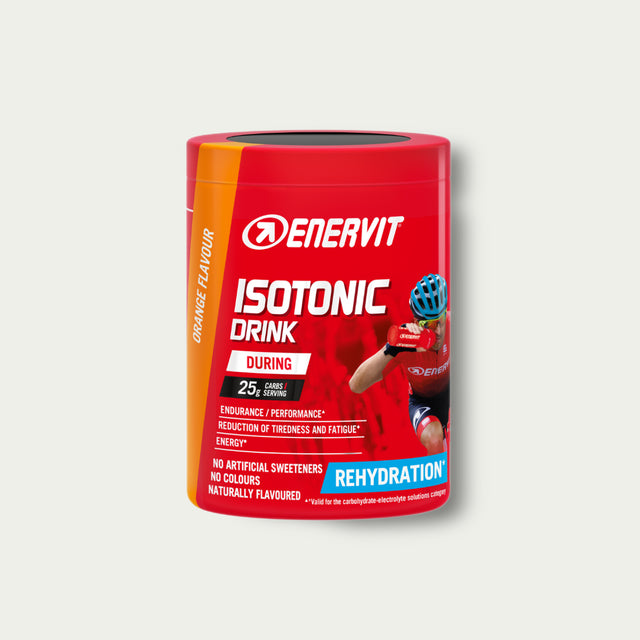
Enervit Isotonic Drink

25 g of carbs per 500 ml bottle
Isotonic, with sodium, potassium and magnesium
420 gram tub, good for 14 bottles

€9,95per tub

Choose and order
Hot weather: just fluid and salt

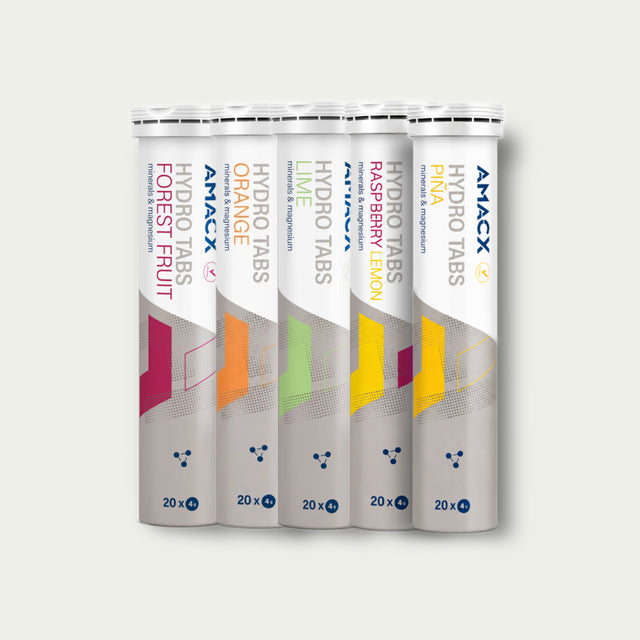
Amacx Hydro Tabs

205 mg of sodium per tablet
No carbs, sugar-free and not sweet
Orange, Lime, Forest Fruit, Piña and Raspberry Lime

€9,99per tube

Choose and order

2 to 3 hours: long training ride or sportive

This is where nutrition starts to count. Your bottle is the base, your jersey pocket tops it up.

Per hour: 60 to 80 grams of carbs.
How to do it: start eating in the first hour. A bottle of isotonic sports drink per hour already provides 25 to 30 grams. Top up with a bar or gel from the same brand, something small every 20 to 30 minutes. If it's warm, take a second bottle with electrolytes.
What to take: two bottles, a bar or gel per hour, and one gel or a few chews in reserve for the closing stage.
The base in your bottle

Amacx Energy Drink Sachets

30 g of carbs per serving, 2:1 glucose and fructose
372 mg of sodium per serving, plus magnesium
One sachet per bottle, also handy for refilling on the road

€2,95per sachet

Choose and order
Something solid on the side

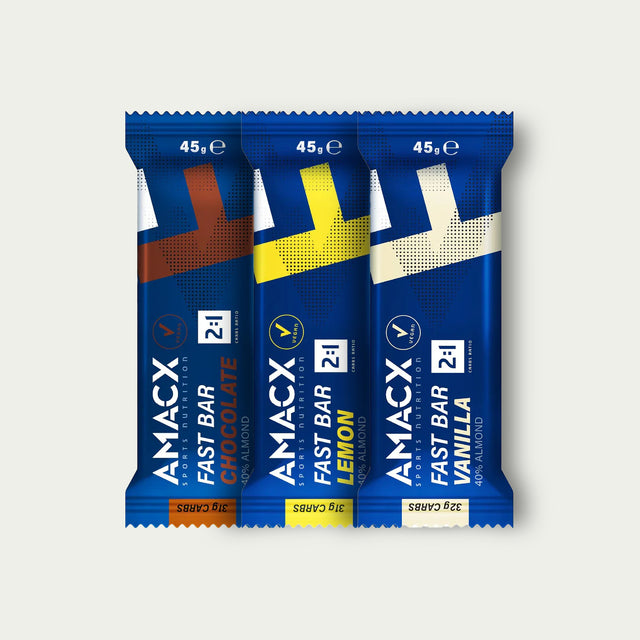
Amacx Fast Bar

31 to 31.5 g of carbs per bar, 2:1 glucose and fructose
Soft bite, easy to eat on the bike
Vanilla or Chocolate, with 40% almonds

€2,95per bar

Choose and order
Reserve for the closing stage

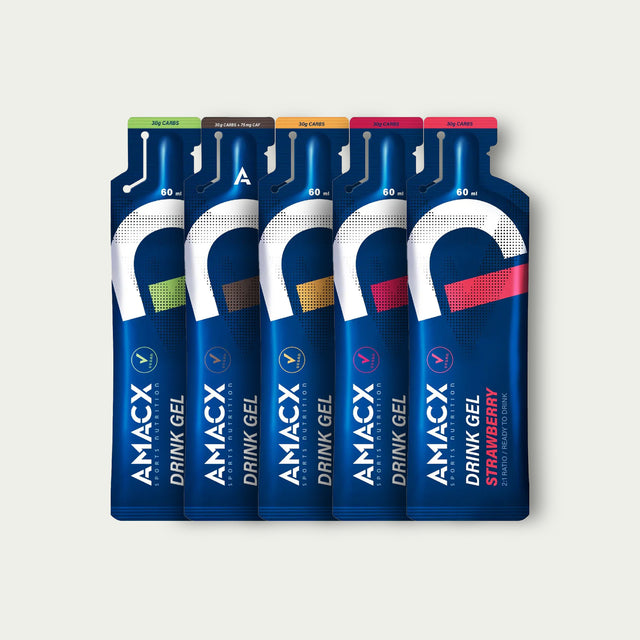
Amacx Drink Gel

30 g of carbs per gel, 2:1 glucose and fructose
With water already in it: no extra drinking needed
200 mg of sodium, also available with caffeine

€2,50per gel

Choose and order

Longer than 3 hours: gran fondo and long rides

You don't conquer a ride of 100 kilometres or more with your legs alone. Every year a good share of riders come unstuck not on fitness, but on food.
Per hour: 80 to 100 grams of carbs, with glucose and fructose. If you ride easy, the lower end will do. If you ride hard or your ride lasts longer than 5 hours, move up towards 100. Build this up in training.
How to do it: start eating within the first half hour. Eat mainly solid food in the first hours, switch to gels and chews after the halfway point and save a caffeine gel for the last hour and a half. Drink a few sips every 10 minutes. In the heat, fill your second bottle with electrolytes. Check beforehand where the feed stations are and plan your bottles around them.
What to take: up to about 100 km: two bars, three to four gels and two bottles. Around 150 km: two to three bars, five to six gels, a pack of chew blocks, two bottles and powder or tablets for refilling. Always: one extra gel as an emergency ration and a bank card.
MomentWhat you eat and drinkGuideline
Hour 1Bar plus a bottle of isotonic sports drink, and a gelAbout 80 g
Hour 2Bar or pack of chew blocks plus sports drink80 to 90 g
Hour 3Gel plus half a bar plus sports drink80 to 90 g
Hour 42 gels plus sports drink, or cola at a stop80 to 100 g
Hour 5 onwards2 gels plus sports drink every hour, possibly one with caffeine for the finale80 to 100 g
The first hours

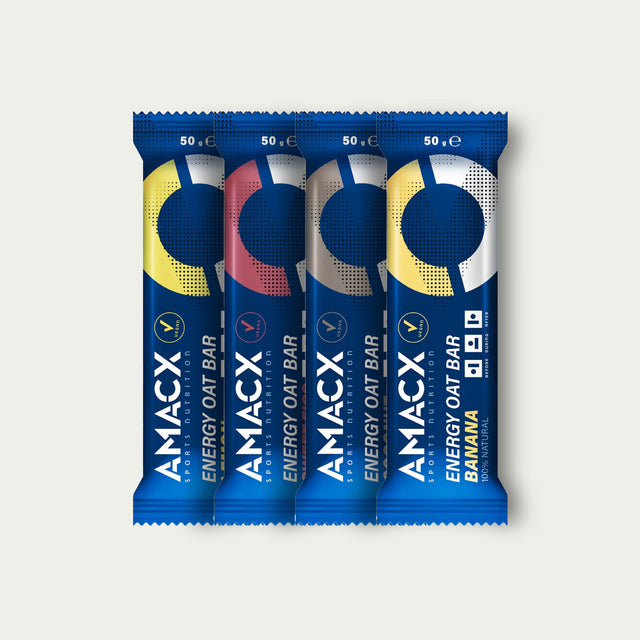
Amacx Energy Oat Bar

31.5 g of carbs per bar, made with oats
Soft and easy to chew at an easy pace
Coconut, Lemon, Sweet Figs or Banana

€2,50per bar

Choose and order
Between a bar and a gel

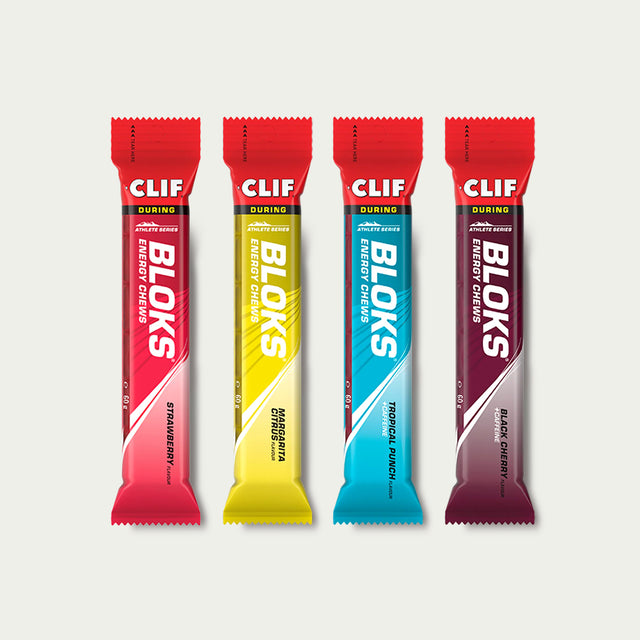
Clif Bloks Energy Chews

48 g of carbs per pack of six blocks
Chew them one at a time, whenever it suits you
Also with caffeine, they keep their shape in the heat

€3,95per pack

Choose and order
After the halfway point

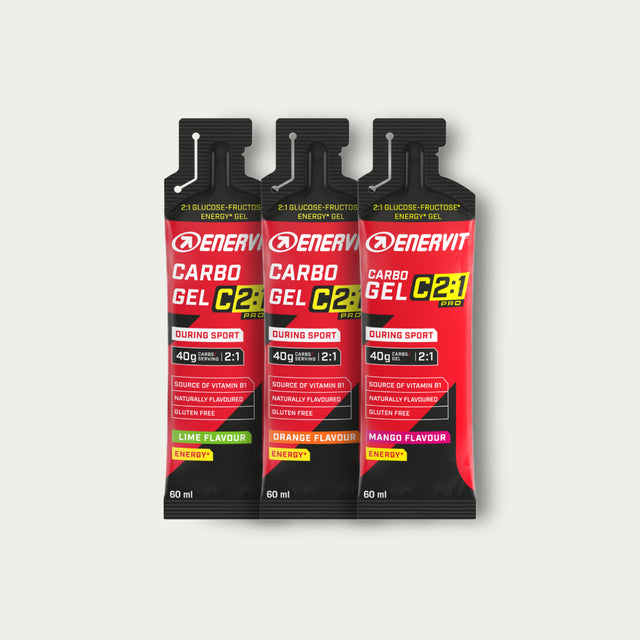
Enervit Carbo Gel C2:1PRO

40 g of carbs per gel, 2:1 glucose and fructose
Almost half an hour of energy in one pack
Soft, liquid texture and mild sweetness

€2,95per gel

Choose and order

For the finale: the Enervit Carbo Gel C2:1PRO Caffeine with 40 g of carbs and 100 mg of caffeine. Only if you've tested caffeine in training.

At pace: group ride, sportive or race

The harder the pace, the more liquid your nutrition. At your limit, you don't want to chew.

Per hour: up to 90 grams of carbs on long rides and in races. Only if you've built up to it in training.
How to do it: get more energy from your bottle and top up with gels. You won't get 90 grams per hour from an isotonic drink alone. If you're a salty sweater, often get cramp or ride in the heat, match your electrolytes to your sweat. Use your long rides to test your race nutrition at pace.
What to take: a bottle of high-carb drink mix, a second bottle with electrolytes and gels in your jersey pocket.
More energy from your bottle

Maurten Drink Mix 320

80 g of carbs per 500 ml bottle
Hydrogel, for fewer stomach issues at a high intake
Caffeine-free, vegan and Informed Sport certified

€3,50per sachet

Choose and order
Second bottle: salt tailored to you

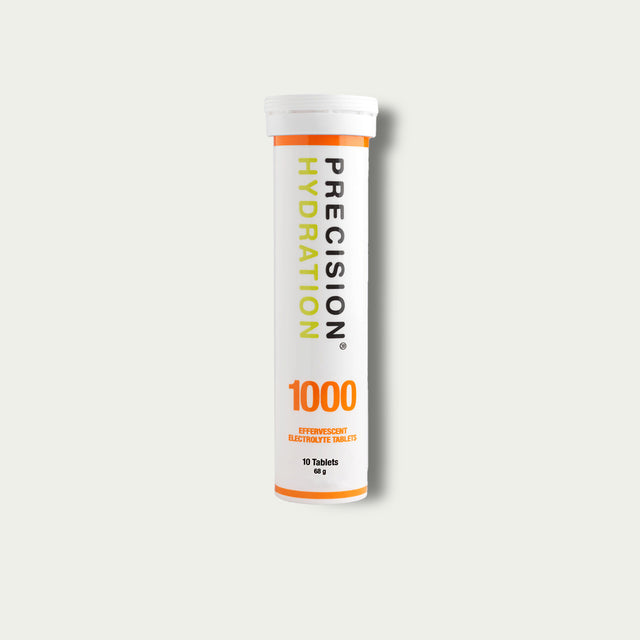
Precision PH 1000

1,000 mg of sodium per litre, 500 mg per 500 ml bottle
Sugar-free and hypotonic
For salty sweaters, cramp and rides in the heat

€9,99per tube

Choose and order
Gel at pace

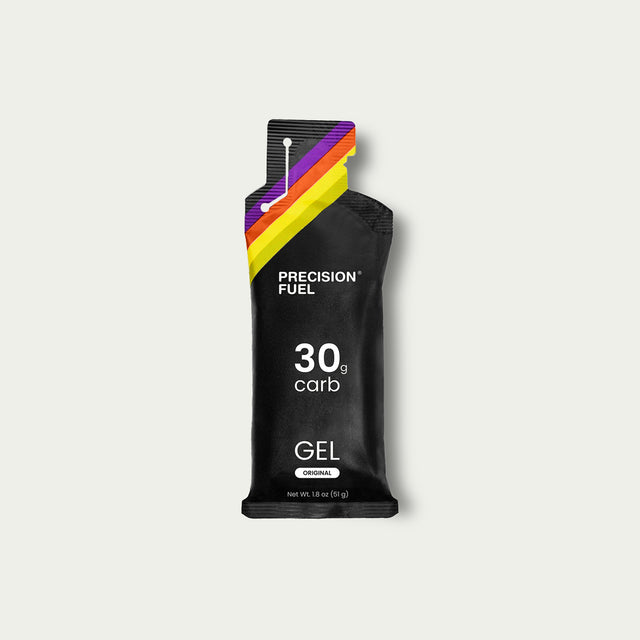
Precision PF 30 Gel

30 g of carbs per gel, 2:1 glucose and fructose
Mild, neutral flavour
No electrolytes: combine it with PH in your bottle

€2,75per gel

Choose and order

Torn between two rides? Choose the longer one. You can't be too well prepared with your nutrition.

Step 4: Test

Practise your plan and avoid these 5 mistakes

Test your plan in full at least once on a long training ride, so you don't do anything new on the day itself. In a race or big sportive, only use what you've tried before on a long ride. If you're riding a race, gran fondo or triathlon, test your race nutrition at pace.

Want to go up to more grams per hour? Your stomach is just as trainable as your legs. Start from what works well now, for most athletes 30 to 40 grams per hour, and increase by 10 grams each week. Allow four to six weeks to get to 60 to 90 grams.

The 5 mistakes
Waiting until you're hungry. By the time you feel peckish, you're already in deficit. Start in the first hour and then eat something every 20 to 30 minutes.
Not counting your bottle. A bottle of drink mix easily provides 40 grams of carbs. Forget it and you'll unintentionally eat too much or too little. Add everything up.
Relying on the feed station. Take everything your plan says you need. A puncture or a missed station shouldn't be able to wreck your ride.
Never practising race nutrition. Use your long rides to test your race nutrition at pace.
Riding home on empty. It's in the last hour that you're most likely to hit the wall. Always keep one gel or a few chews in reserve for the closing stage.
40 to 60 gof fast carbs is what you take straight away if the bonk strikes anyway: two gels, or a gel plus a can of cola. Drop back to an easy pace and top up again after a quarter of an hour. After 15 to 20 minutes, the lights come back on.

Not sure what suits your rides?

Email us your average ride duration and what you use now. We don't make nutrition plans, but we're happy to suggest a sensible mix.
Frequently asked questions

All about sports nutrition and cycling

How many carbs do I need per hour on the bike?

That depends on how long and how hard you ride. Shorter than an hour: nothing. 1 to 2 hours: 30 to 60 grams per hour. 2 to 3 hours: 60 to 80 grams per hour. Longer than 3 hours: 80 to 100 grams per hour, with products that combine glucose and fructose. Build this up on your long rides.

How much should I drink per hour on the bike?

A general guideline is 500 to 750 ml per hour, about one to one and a half bottles. In hot weather and at a high pace you need more, in cold weather and on an easy ride less. Drink to a fixed rhythm: a few sips every 10 to 15 minutes works better than half a bottle every now and then.

What's the difference between an isotonic drink and an electrolyte drink?

An isotonic drink, such as the Amacx Energy Drink, contains carbs for energy and electrolytes for your fluid balance. An electrolyte drink, such as the Amacx Hydro Tabs or Precision PH, contains little or no carbs and focuses on fluid and salt.

Can I combine two sports drinks on a long ride?

Yes, and that often works well: one bottle of isotonic sports drink for energy and one with electrolytes for fluid and salt. That way you can alternate depending on the weather and how you feel. Do choose two drinks from the same brand, such as the Amacx Energy Drink with the Amacx Hydro Tabs.

What should I eat before a gran fondo or long sportive?

A generous, carb-rich meal low in fat and fibre the evening before. Two to three hours before you set off, a breakfast with 2 to 3 grams of carbs per kilo of body weight, such as porridge with banana and honey or white bread with jam. In the last hour before the start, sip your way through a bottle of isotonic sports drink.

How do I recognise the bonk and what do I do about it?

Your concentration slips, you go quiet and irritable, your speed drops for no obvious reason and your legs feel like jelly. Drop back to an easy pace and immediately take 40 to 60 grams of fast carbs: two gels, or a gel plus a can of cola. Top up again after a quarter of an hour and eat something small every half hour for the rest of the ride.

Can I drink cola on the road?

Yes. A can of cola in the last hour and a half is a classic: the combination of sugar and caffeine gives you a boost for the final stretch. Count the carbs in your hourly total and drink water alongside it, because cola alone doesn't quench your thirst very well.

How much salt do I need on the bike?

For most riders, 300 to 500 mg of sodium per hour is enough. Heavy sweaters with white marks on their jersey are more likely to be towards 1,000 mg. That's why Precision makes electrolytes in three strengths. If in doubt, start with PH 1000. Read more in the electrolyte guide.

Now you know what, when and how much.

The rest is practice. Choose your ride, order what you need and test it on your next long ride.

Prefer to browse first? Shop all sports drinks and energy bars. Further reading: The best sports drink for cyclists, What do you eat on long training rides? and Nutrition plan for long rides and gran fondos.