


Energy Gels
Fast carbs in their most compact form. From small hydrogels for runners to big pouches for the triathlon bike, with and without caffeine.


No products match this filter.
Which gel suits your effort?





Three things to look for
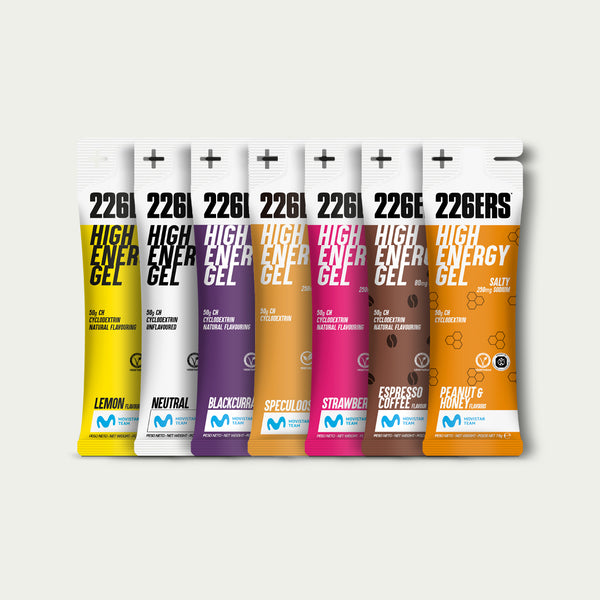
Carbs per gel
Small gels for runners, big pouches for the bike and triathlon.
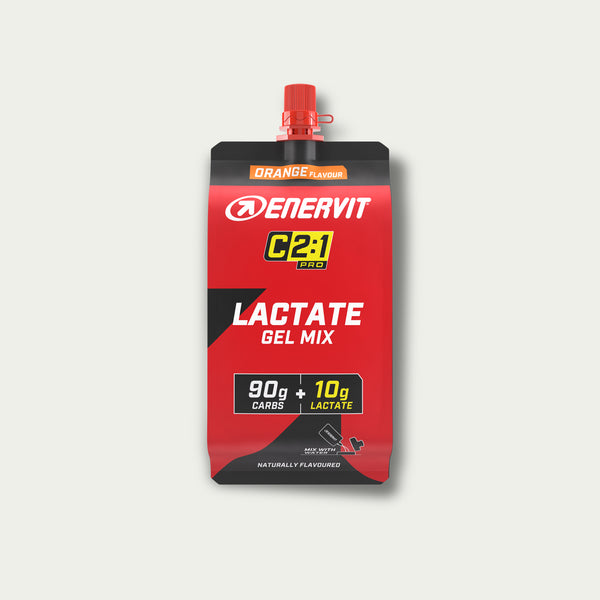
The ratio
2:1 up to 90 g per hour, 1:0.8 up to 120 g per hour with a trained gut.
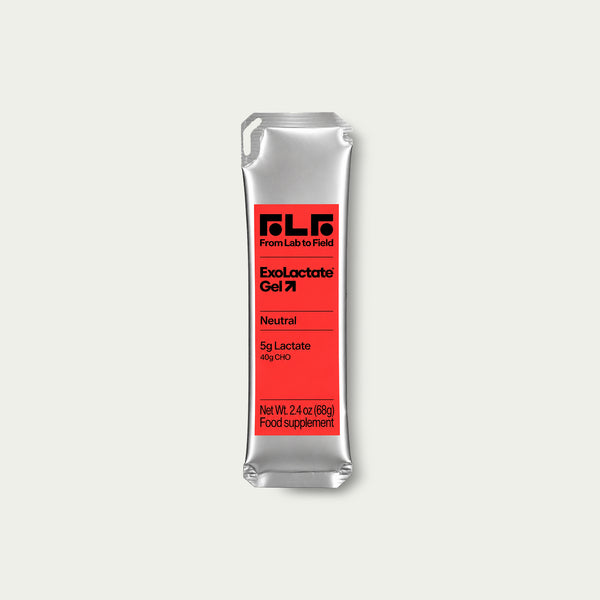
Caffeine
Save caffeine for the final hour and test it in training first.
Take your first gel after 30 to 45 minutes and repeat every 20 to 30 minutes. Don't wait until you feel the dip: by then you're too late.
Learn more
Why energy gels
Energy gels, or simply gels, are fast carbohydrates in their most compact form. Instant fuel for your muscles during running, cycling and triathlon, packed in a sachet that fits in any jersey pocket or race belt. They delay fatigue and help you avoid the dreaded bonk, even deep into your race. Above you'll find every energy gel in our range, from top brands such as Maurten, Amacx, Precision Fuel & Hydration and Enervit. Below you'll find everything you need to know to choose the right gel: the types, the ratios, how many you need per hour and when to take them.
Pros
- Fast carbs in the most compact form: from 20 to 300 grams per pack
- Isotonic drink gels and hydrogels need no water: ideal for runners without a bottle
- Every proven technology: hydrogel, isotonic, cyclodextrin and high-carb
- Both ratios available: 2:1 up to 90 grams per hour and 1:0.8 up to 120 grams per hour
- Caffeine versions from 20 to 160 mg for the second half of your race
- Every brand independently tested for banned substances: Informed Sport, Cologne List and Doping Free
Good to know
- Concentrated and high-carb gels always need a few sips of water: check the advice for each product
- Above 60 grams per hour you need a trained gut: build up in training
- Always test new gels and flavours in training first, never in a race
- Gels mainly provide energy and only a little sodium: in hot weather, plan your electrolytes separately
Three types of energy gel: isotonic, hydrogel and concentrated
Not every gel is the same. The type determines how many carbs you get, whether you need water with it and how the energy is released. Isotonic drink gels have the same particle concentration as your body fluids and are absorbed straight away without extra water. Hydrogels encapsulate the carbs in a matrix of alginate and pectin, which forms a protective gel in your stomach for smooth transport to the gut. Concentrated and high-carb gels deliver the most carbs per pack, but always need a few sips of water for proper absorption. There are also gels based on cyclodextrin: a carbohydrate with a high molecular weight and low osmolarity, for fast gastric emptying and a steady release without sugar spikes.
| Type | Water needed? | Key feature |
|---|---|---|
| Isotonic drink gel | No | Absorbed straight away, ideal for runners without a bottle. For example the Amacx Drink Gel and the Precision PF 30. |
| Hydrogel | No | Maximum stomach comfort at high intakes thanks to the gel matrix. The technology behind Maurten gels. |
| Concentrated and high-carb | Yes, a few sips | The most carbs per pack, from 40 to 300 grams. For example the Enervit Carbo Gel and the Precision PF 90. |
The 2:1 and 1:0.8 ratios: how carb absorption works
Your gut absorbs carbohydrates via two routes: glucose via the SGLT1 transporter and fructose via GLUT5. With glucose alone, absorption tops out at around 60 grams per hour. Adding fructose opens up the second route, and that intake comes on top. The ratio of glucose to fructose sets your ceiling.
| Feature | 2:1 ratio | 1:0.8 ratio |
|---|---|---|
| Fructose share | 33% of the carbs | 44% of the carbs |
| Maximum absorption | Up to 90 g per hour | Up to 120 g per hour |
| Who it's for | The proven standard for almost every endurance athlete | Goal races and athletes with a trained gut |
| Examples | Amacx Drink Gel, Precision PF range, Enervit C2:1PRO | Maurten gels, Amacx Turbo, Pillar |
How many gels per hour: from 30 to 120 grams
How many carbs you need per hour depends on the duration and intensity of your effort. Three proven levels.
30 to 60 g per hour (training, efforts up to 2 to 3 hours): the solid base for most endurance athletes. Think 1 to 2 gels of 25 to 30 grams per hour. Also a good fit if you're new to sports nutrition.
60 to 90 g per hour (marathons, triathlons, long road races): the race standard, built on the 2:1 ratio. For example two 30-gram gels plus a bottle of sports drink, two large 40-gram gels, or one 90-gram pouch per hour.
90 to 120 g per hour (goal races, trained gut): for this you switch to the 1:0.8 ratio, which makes the most of the fructose route. Think three 40-gram gels or two 55-gram gels per hour. Build this intake up over several weeks in training.
You can freely mix gels with the same ratio, even across brands: your total glucose and fructose intake per hour determines absorption, not the individual product.
Timing, water and caffeine: six practical rules
1. Start after 30 to 45 minutes. Take your first gel before you feel an energy dip: stay ahead of the bonk.
2. Repeat every 20 to 30 minutes. Frequent small servings are tolerated better than large amounts in one go.
3. Always test in training. Never try a new gel or flavour for the first time in a race.
4. Water with concentrated gels. Thick and high-carb gels need a few sips of water. Isotonic drink gels and hydrogels you can take without.
5. Train your gut. If you want to reach 80 grams per hour or more, build up over several weeks in training.
6. Use caffeine strategically. Save caffeine gels for the second half, expect the effect after 30 to 60 minutes and use 3 to 4 mg per kg of body weight as a guideline.