




Carbohydrates during exercise
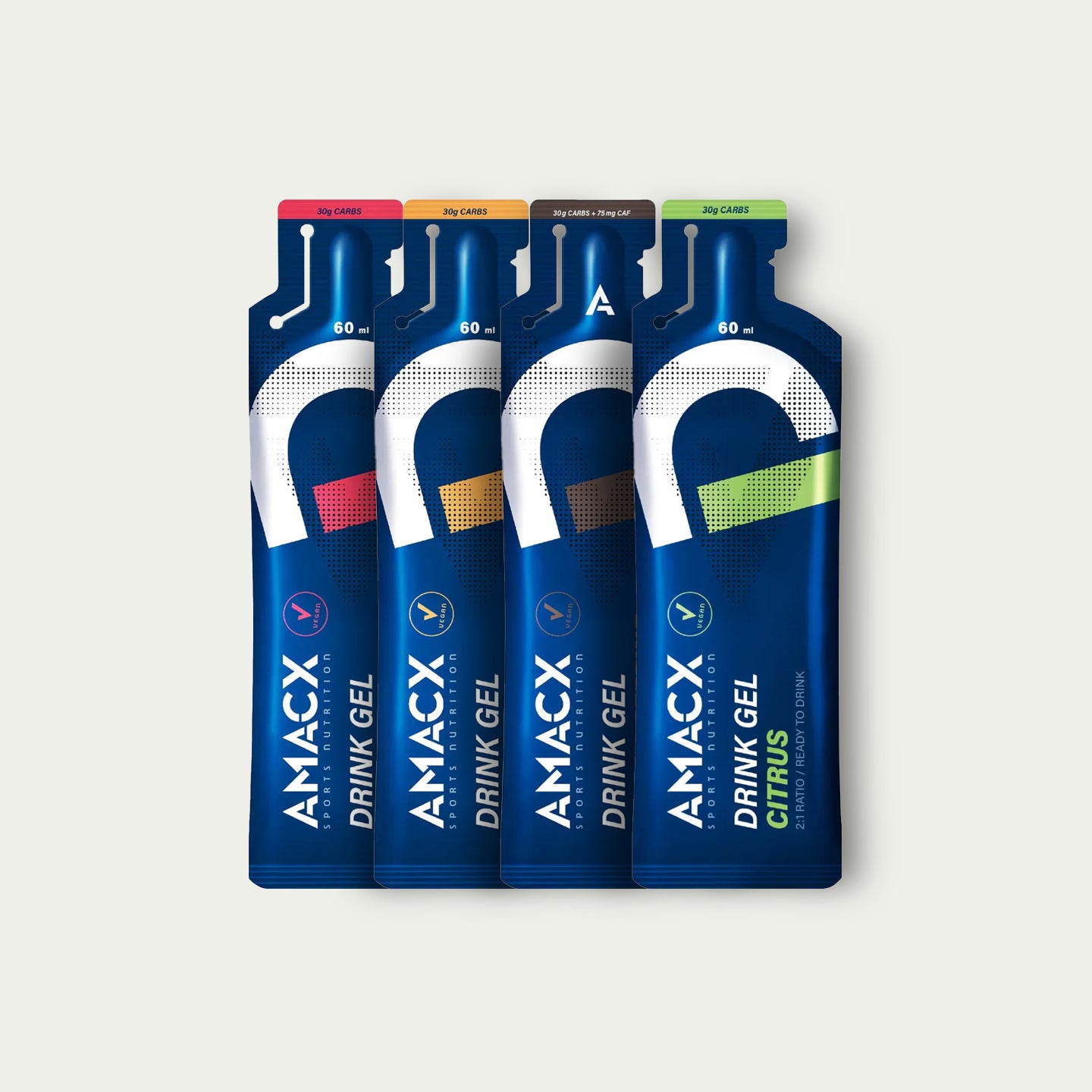
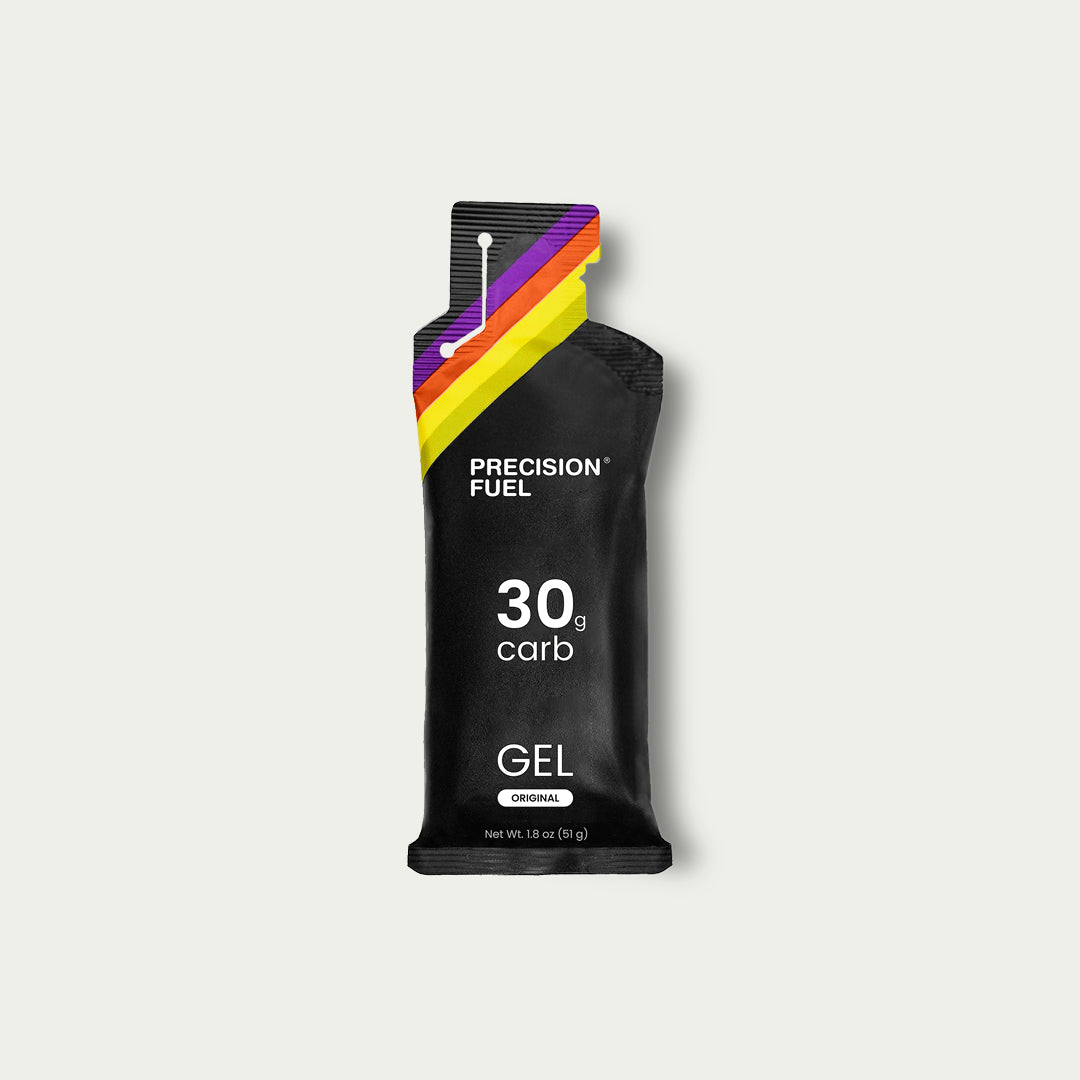
How many grams per hour for your sport and duration, what the carbohydrate ratio does, how to train your gut and when to choose gels, drinks, bars or chews.

Why carbohydrates
Your body has two fuel tanks: fat and carbohydrates. You have more than enough fat, but it releases energy slowly. The harder you go, the more you run on carbohydrates. And that tank is small.
Eating during exercise doesn't fill the tank, it saves it. Every gram you take in on the way doesn't have to come from your stores. That's why you start early, long before you feel anything.
How many grams per hour
For less than an hour you don't need anything on the way. Start at 60 grams per hour if you don't have any experience yet. Elite athletes go up to 120 grams per hour, but that's the end point of months of building up, not a starting point.
By sport and duration
For running, the numbers are slightly lower than on the bike. Your stomach is jolted with every step.
On the bike you can tolerate the most, because your stomach is calmer than when running.
The bike is when you eat. During the run you take less.
When swimming you're tied to the side or the boat. Plan your feeds in advance.
The carbohydrate ratio
Glucose and maltodextrin use one gateway in your gut, which can handle about 60 grams per hour. Fructose uses a different gateway. Combine the two and you can absorb 90 grams per hour or more. That's what the carbohydrate ratio tells you.
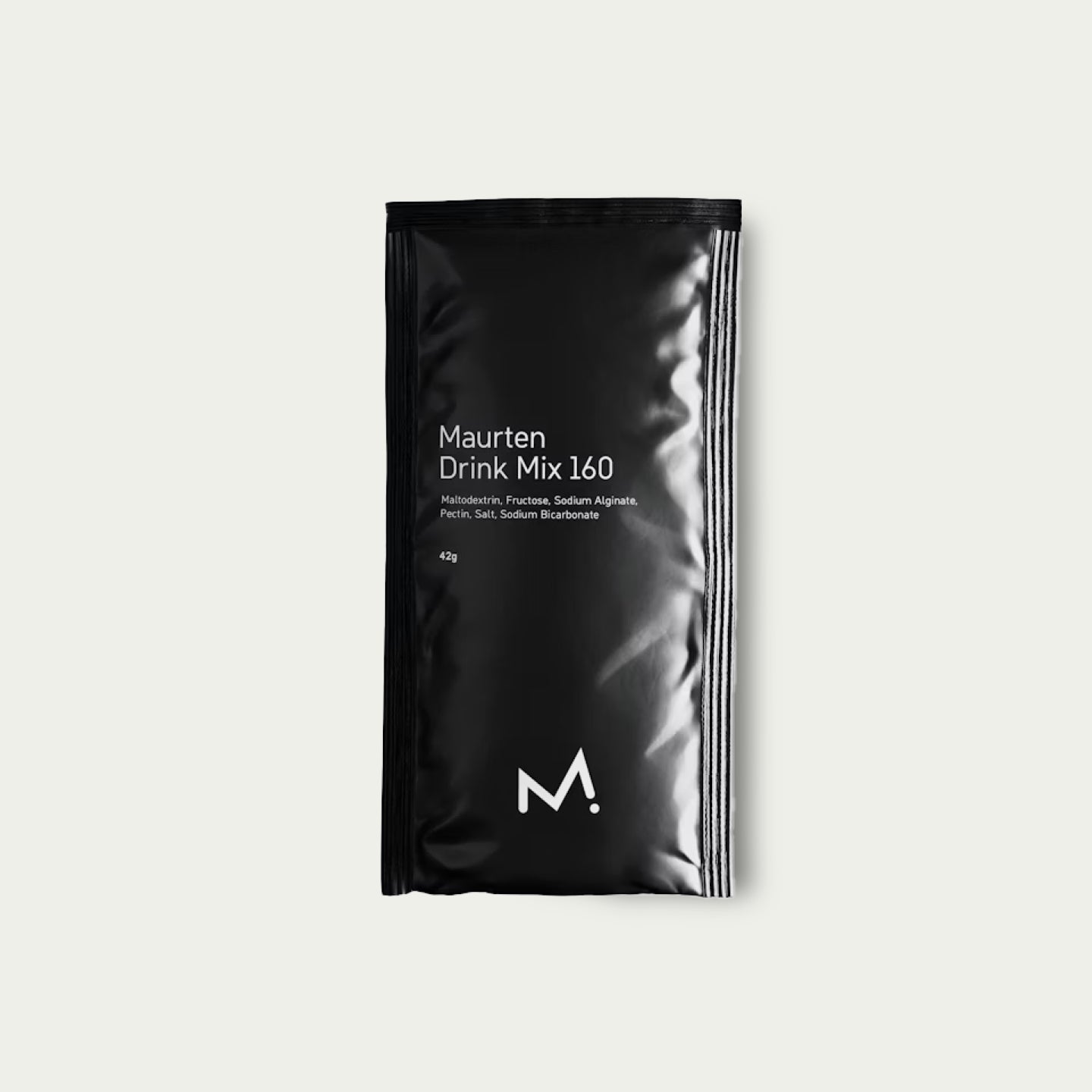
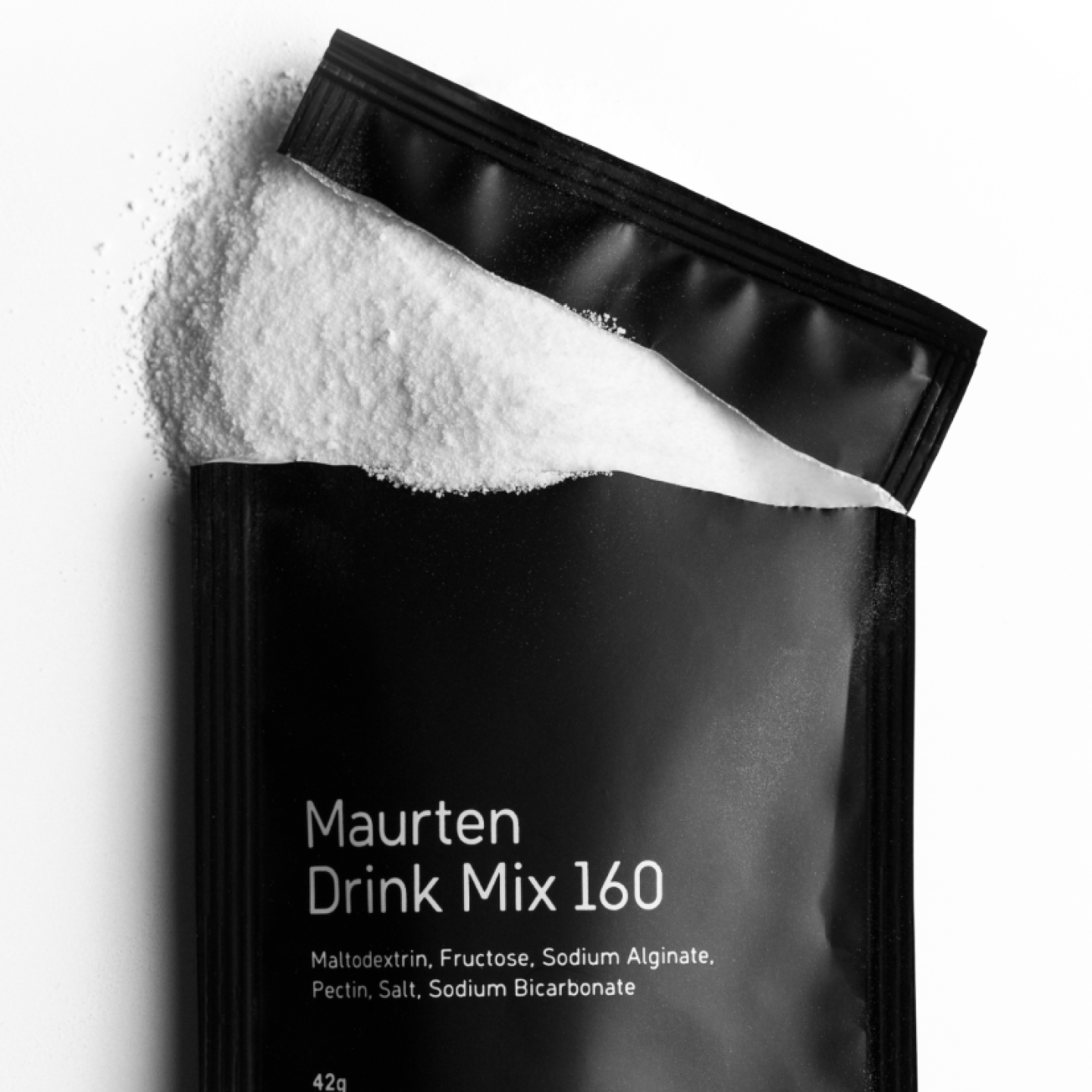
Stick to one brand: gels, drink mix and chews from the same brand are designed to work together, so the overall ratio stays right.
Fast carbohydrates for exercise
Fast carbohydrates are sugars that your body absorbs quickly, such as glucose, maltodextrin and fructose. They reach your blood within a quarter of an hour and give your muscles fuel straight away. Slow carbohydrates, such as wholemeal bread, porridge and pulses, are digested more slowly because of the fibre, fat or protein that comes with them.
Just before and during exercise you mainly want fast carbohydrates: they give you energy quickly and sit lightly on your stomach. Slow carbohydrates belong in your regular meals, well before training.
Before and during
Work out your schedule
This is a starting point, not a personal plan. Test your choice in training first.
Train your gut
- 1Start with what works nowFor most athletes that's 30 to 40 grams per hour.
- 2Practise once or twice a weekIn your long session, and now and then at race pace.
- 3Increase by 10 grams per hour each weekIf it goes wrong once, stay at the same level for a week.
- 4Allow four to six weeksThen you'll be at 60 to 90 grams. Plan this well before your race.
Gels, drinks, bars or chews
Caffeine
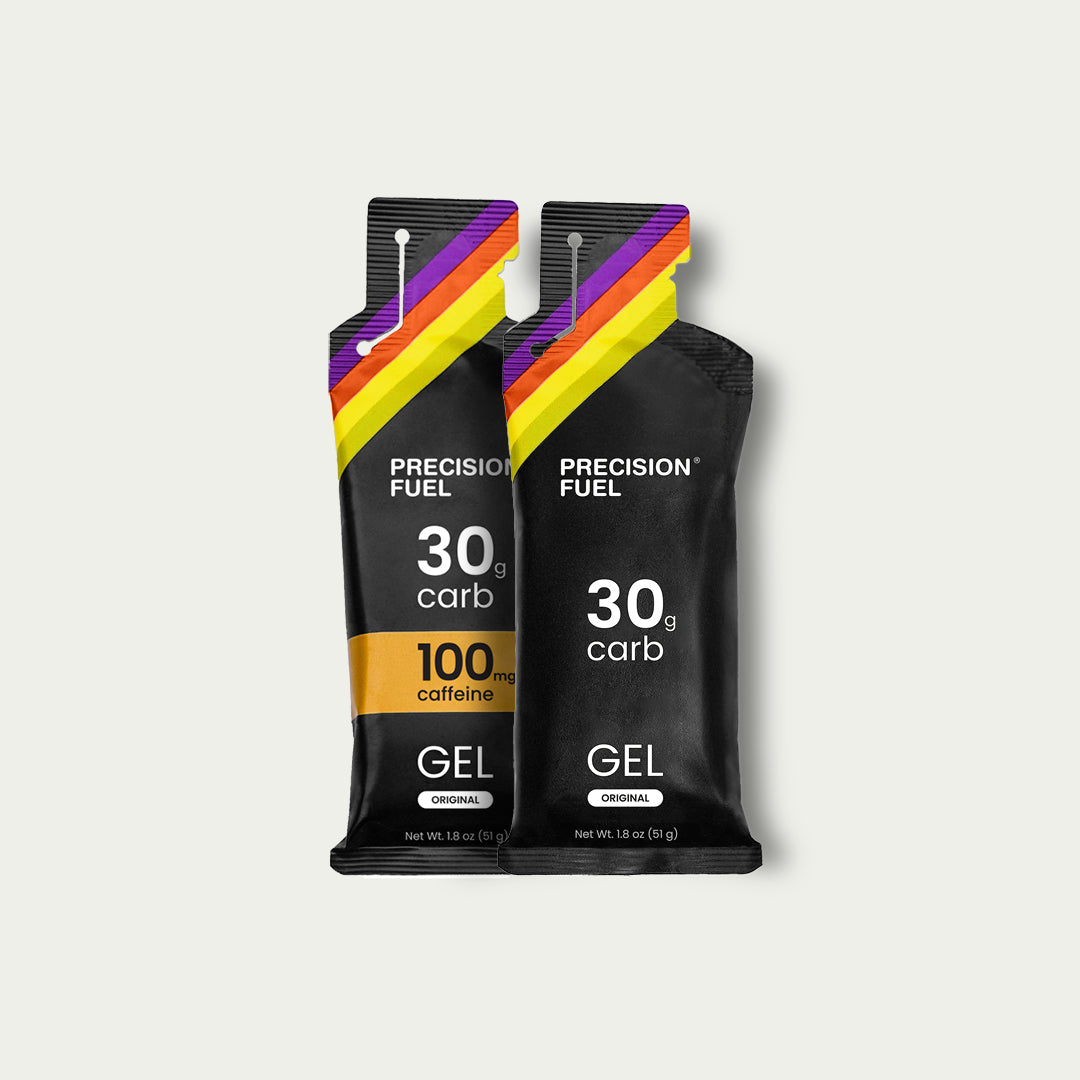
For adults, 400 mg per day is the safe upper limit. If you react strongly to coffee, are pregnant or have heart problems, skip caffeine gels.
Preventing stomach problems
Frequently asked questions
How many gels do I need for a marathon?
Use 60 grams of carbohydrates per hour as a starting point. With a finish time of 3 hours and 45 minutes and 25-gram gels, that comes to eight to nine gels. Use the calculator above to make your own schedule.
Do I need to drink water with a gel?
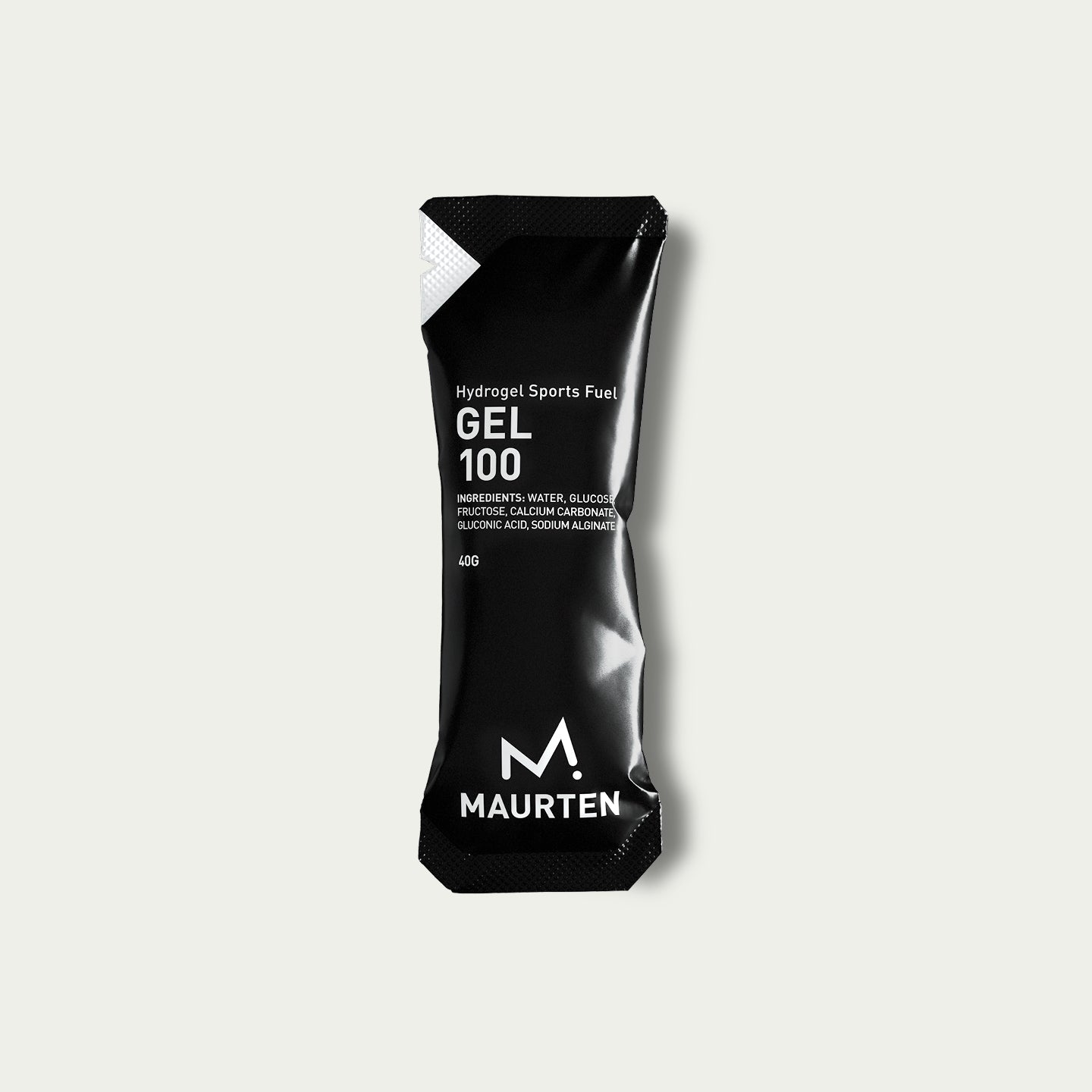
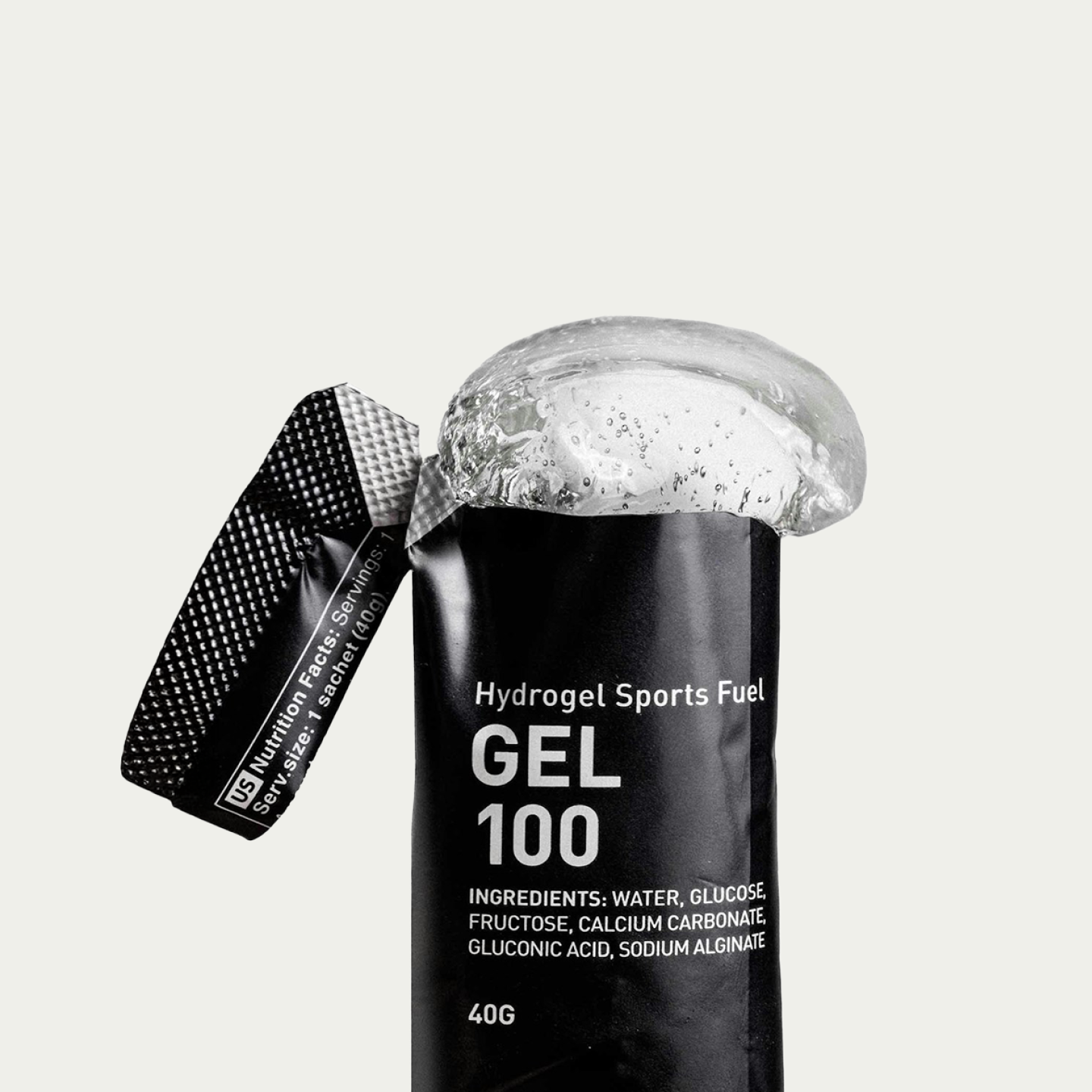
With a regular gel, yes: a few good sips. Isotonic gels and hydrogels are made so you can take them without water.
Do I need carbohydrates for a one-hour session?
No. Your stores are more than enough for an hour, even at a high pace. Only from 60 to 90 minutes does eating on the way start to make a difference.
Can't I just have a banana or wine gums?
You can, especially for easy sessions. The downside is practical: carrying, chewing and dosing at pace is tricky, and the ratio of glucose to fructose isn't designed for high intakes.
Will gels during exercise make me put on weight?
No. What you eat during a long effort, you burn straight away. If you eat too little on the way, you recover less well and often make up for it twice over later.
How long do gels keep?
Usually one to two years. The date is on the packaging. Store them somewhere dry and out of direct sunlight.
What are fast carbohydrates?
Sugars that your body absorbs quickly, such as glucose, maltodextrin and fructose. You'll find them in gels, sports drink, a banana or white bread with jam. They're ideal before and during exercise, because they give you energy quickly and sit lightly on your stomach.
Do you know what you need per hour?
Browse all energy gels, with the carbohydrates per gel and the carbohydrate ratio listed.These are general guidelines, not a personal plan. Test everything in training first. If you have diabetes or another condition where your carbohydrate intake matters, talk to your doctor.