Skip to content

Ordered before 13:00, shipped the same dayFree shipping from €59A little gift with every order

Ordered before 13:00, shipped the same day

Country and language
Country
Language

Prices in euros, including VAT. Shipping costs are shown at checkout.

Your cart

Your cart is empty

Not sure what you need? Start with other athletes' favourites.

Shop all sports nutrition

Other athletes also bought:

Amacx Drink Gel Try-out Pack with five gels in all flavours
Sale price€8,99 Regular price€10,00
Precision Fuel PF 30 Gel energy gel, single gelPrecision Fuel PF 30 Gel and PF 30 Caffeine Gel side by side
Sale priceFrom €2,75
Maurten Gel 100 energy gel, single gelOpened Maurten Gel 100 with the firm hydrogel visible
Sale priceFrom €3,25
SportvoedingDirect gift card, white gift card with logoSportvoedingDirect gift card in a trouser pocket
Sale priceFrom €10,00
Maurten Drink Mix 160 sports drink, single sachetOpened sachet of Maurten Drink Mix 160 with the sports drink powder visible
Sale priceFrom €2,95
Running

A strong finish starts with what you eat. Before, during and after your run.

You train for weeks. It's a shame if your pace collapses because you ate too late or too little. On this page you'll see in four steps what you need: how many carbs per hour, when to take your first gel and which sports nutrition suits your distance. From 10 km to the marathon, without a complicated plan.

Order before 1 pm, shipped the same day Free shipping from €59 Maurten, Precision, Amacx, 226ERS, Enervit and Clif in one place
Trail runner drinking a sports drink from a soft flask
How it works

Four steps and you'll know enough

Sports nutrition isn't rocket science. It's timing and practice. Follow the four steps below. If you only want to know what to order, skip straight to step 3.

  1. 1KnowWhy you run out of fuel without a plan
  2. 2PlanBefore, during and after, and which format suits you
  3. 3ChooseYour distance, your sports nutrition
  4. 4TestTrain your gut, avoid the classic mistakes
In brief

How much sports nutrition do you need?

By distance
Under 1 hour (5 and 10 km): nothing during the run. A good breakfast, water and, if you like, some caffeine beforehand are enough.
1 to 2 hours: 30 grams of carbs per hour. That's about 1 gel per hour.
2 to 2.5 hours (half marathon): 30 to 60 grams per hour. A gel every 25 to 30 minutes.
Over 2.5 hours (marathon): 60 to 90 grams per hour. With glucose and fructose, and tested beforehand on your long runs.
After the finish: carbs plus 20 to 30 grams of protein within 1 to 2 hours.

Want to see straight away what this means for your distance? Go to step 3.

Step 1: Know

Why you run out of fuel after 90 minutes

Your body has two tanks. Fat: almost unlimited, but slow. Carbs: fast, but the supply is small. Your muscles and liver hold enough for roughly 90 minutes to 2 hours at race pace. The harder you run, the more you draw from that small tank.

When that tank is empty, you know the feeling. Heavy legs, your pace drops, your head wants to go home. Hitting the wall. Sports nutrition during a run does one thing: it tops up what you burn, so your pace holds all the way to the finish.

Three questions decide everything: what you take, when you take it and how much per hour. That depends on your distance and your pace, not on the brand on the packet. That's why we start with your distance, not with a gel.

90 minRoughly how long your carb stores last at race pace.
60 gThe maximum amount of glucose your gut absorbs per hour. Add fructose and that becomes 90 grams or more.
20 to 30 minAfter this long you take your first gel. Before you get tired, not after.
Step 2: Plan

Your timeline: before, during and after

Sports nutrition is timing. This is the rhythm that works for most runners. In step 3 you adjust the amount per hour to your distance.

MomentWhat you doHow much
The evening beforeSomething familiar that's high in carbs and low in fibre and fat: pasta or rice. Don't overeat. Running a marathon? Then eat extra carbs for the last 36 to 48 hours.Marathon: 8 to 12 g per kilo per day
2 to 3 hours before the startLight and high in carbs: white bread with jam, porridge, a banana.1 to 4 g per kilo
15 to 30 minutes before the startA gel or a few sips of sports drink, plus water. Caffeine only if you've tested it in training.25 to 30 g
After 20 to 30 minutes of runningYour first gel. Don't wait until you're tired.See step 3
Then every 20 to 30 minutesA gel or sports drink, with a few sips of water.30 to 90 g per hour, depending on your distance
In warm weather or on a run longer than 2 hoursAdd electrolytes. How much you need varies widely from person to person.Start with 1 tablet per 500 ml bottle
Within 1 to 2 hours of the finishCarbs plus protein. A normal meal works just as well as a recovery shake.About 1 g of carbs per kilo and 20 to 30 g of protein

Two things to remember. Start early: your first gel is an advance, not a rescue. Keep a steady rhythm: a 25 gram gel every 20 minutes is 75 grams per hour, every 30 minutes is 50 grams per hour.

Step 2: Plan

Gel, drink, chews or bar: what suits you?

All formats provide carbs. The difference is in how easy they are to carry, how quickly they work and how your stomach reacts to them.

FormatCarbs per servingWhen it's handyWatch out
Energy gel25 to 90 gramsRaces. Light, fast and easy to dose precisely.Take water with it. Test it in training first.
Sports drink20 to 80 grams per 500 mlTraining and warm days. Drink and fuel at the same time.You need a bottle or an aid station on your route.
Chews15 to 30 gramsLong runs, when you're tired of gels.Chewing takes effort at a high pace.
Bar20 to 45 gramsEasy long runs and trail.Absorbed more slowly, not for race pace.
ElectrolytesNone or very littleHeat, salty sweaters, longer than 2 hours.A supplement to carbs, not a replacement.

Shop all energy gels, sports drinks, chews, energy bars and electrolytes. Read more about how much per hour and the carb ratio in the carbohydrate guide.

Step 3: Choose

Choose your distance

Four distances, four plans. Choose the distance you run. You'll see per hour what you need, what to take with you and which sports nutrition goes with it. We keep it to a few gels we know and trust ourselves.

5 and 10 km: under 1 hour

Good news: you don't need anything on the way. The work happens in the hours before.
Per hour: 0 grams. Your stores are more than enough for an hour of running.
How to do it: a light, high-carb breakfast 2 to 3 hours beforehand. Racing a 10 km flat out? Then caffeine helps: one caffeine gel 15 to 30 minutes before the start. Only if you've tested it in training.
What to take: nothing. At most a bottle for the start.
Before the start

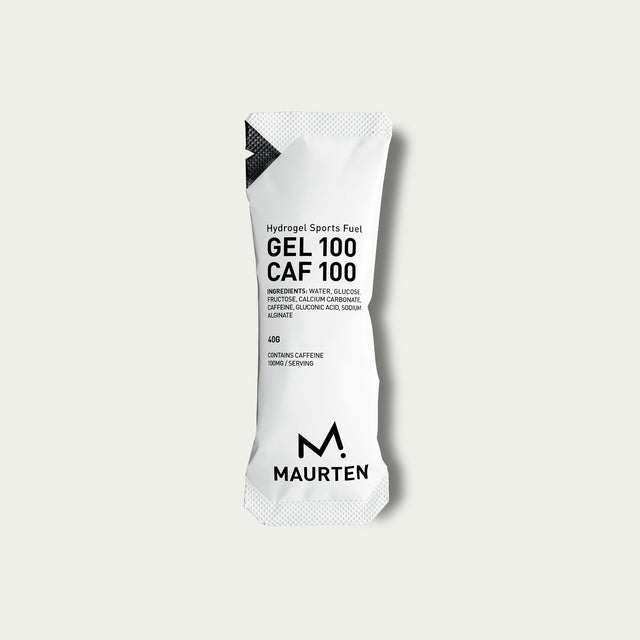
Maurten Gel 100 CAF 100

25 g of carbs and 100 mg of caffeine per gel
15 to 30 minutes before the start of a 10 km
Hydrogel, vegan and Informed Sport certified

€3,95per gel

Choose and order

Prefer to skip the caffeine? A few sips of sports drink just before the start is enough.

Half marathon: 1 to 2.5 hours

This is where sports nutrition starts to make a difference. One simple rhythm is enough.
Per hour: 30 to 60 grams of carbs.
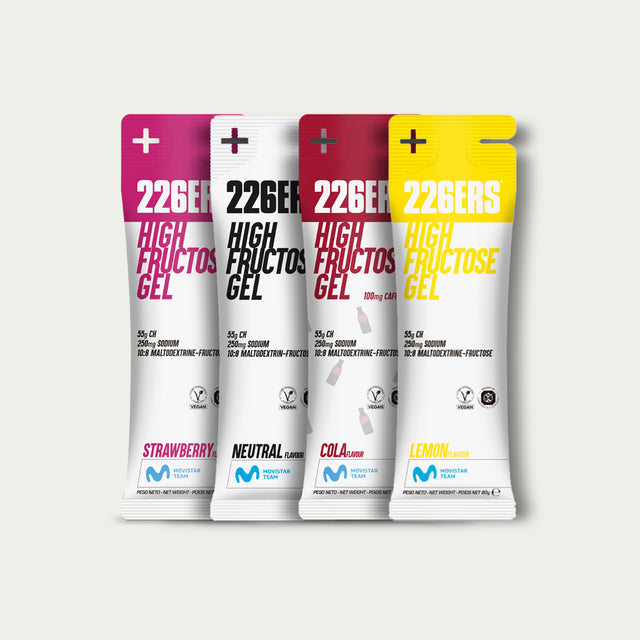
How to do it: first gel after 20 to 30 minutes, then every 30 minutes. If you run the half in 2 hours, that's 3 to 4 gels of 25 grams. Want to carry fewer gels? Then take one 55 gram 226ERS High Fructose Gel every hour, with 300 ml of water.
What to take: 3 to 4 gels plus 1 spare. In warm weather, an electrolyte tablet in your bottle before the start.
The basics: every 30 minutes

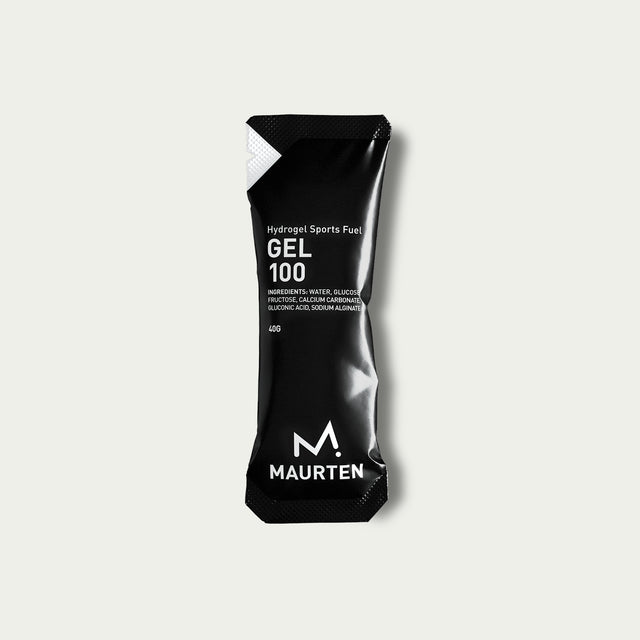
Maurten Gel 100

25 g of carbs per gel, glucose and fructose in a 0.8:1 ratio
Firm hydrogel, gentle on your stomach, can be taken without water
Neutral taste, vegan and Informed Sport certified

€3,25per gel

Choose and order
One gel per hour

226ERS High Fructose Gel

55 g of carbs per gel, maltodextrin and fructose 10:8
250 mg of sodium, good in warm weather
Drink 300 ml of water per gel

€2,85per gel

View and order

Marathon: 2.5 to 5 hours

In the marathon you win or lose on nutrition. Not in the last kilometres, but in the first 20 minutes and in every long run before it.

Per hour: 60 to 90 grams of carbs, with glucose and fructose.
How to do it: load up on extra carbs for the last 36 to 48 hours. First gel after 20 minutes, then a Gel 100 every 20 to 30 minutes: three per hour is 75 grams. Or alternate: every hour a 226ERS High Fructose Gel (55 grams) plus a Gel 100 (25 grams) makes 80 grams. From kilometre 30, swap a regular gel for the Gel 100 CAF 100. Drink at every aid station. Warm? Add electrolytes.
What to take: for a 4 hour marathon, around 10 to 12 Gel 100s, or 4 x 226ERS plus 4 x Gel 100. Make 1 to 2 of them CAF 100. Practise this rhythm on every long run in the last 8 weeks.
The basics: 3 per hour

Maurten Gel 100

25 g of carbs per gel, glucose and fructose in a 0.8:1 ratio
Firm hydrogel, gentle on your stomach, can be taken without water
Neutral taste, so no flavour fatigue by gel 10

€3,25per gel

Choose and order
Fewer gels: 55 grams per gel

226ERS High Fructose Gel

55 g of carbs per gel, maltodextrin and fructose 10:8
250 mg of sodium, good in warm weather
Drink 300 ml of water per gel

€2,85per gel

View and order
From kilometre 30

Maurten Gel 100 CAF 100

25 g of carbs and 100 mg of caffeine per gel
Replaces a regular gel in your rhythm, 1 to 2 per race at most
Hydrogel, vegan and Informed Sport certified

€3,95per gel

Choose and order

Ultra and advanced: 100 grams or more per hour

For runners with a trained gut. Sub-3 marathon, 50 km trail, 100 km. Here you no longer count per gel, but per hour. The trick: one base from your flask or bottle, topped up from your vest.

Per hour: 90 to 120 grams of carbs. Only achievable if you've built up to it over weeks of training.
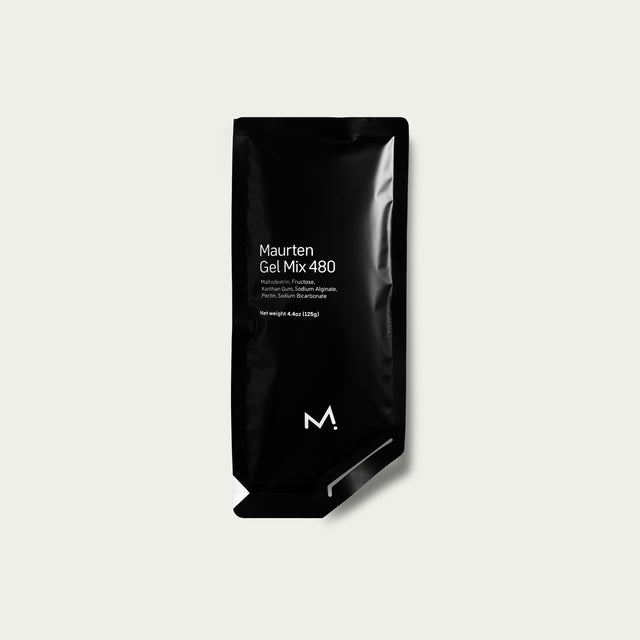
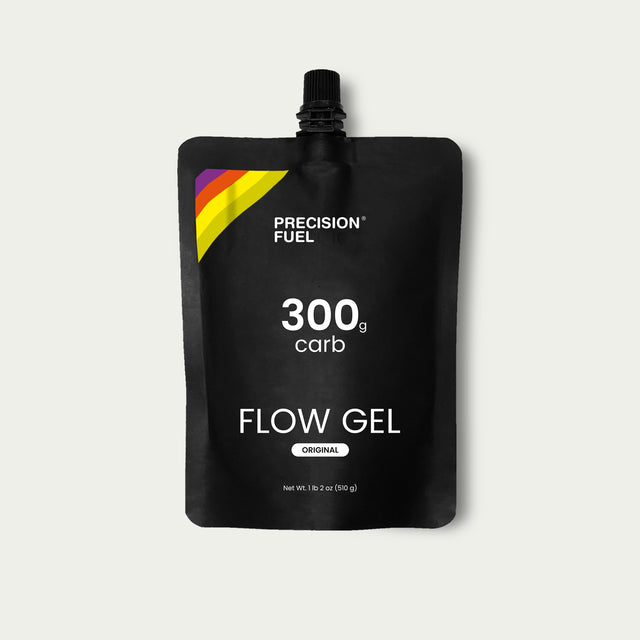
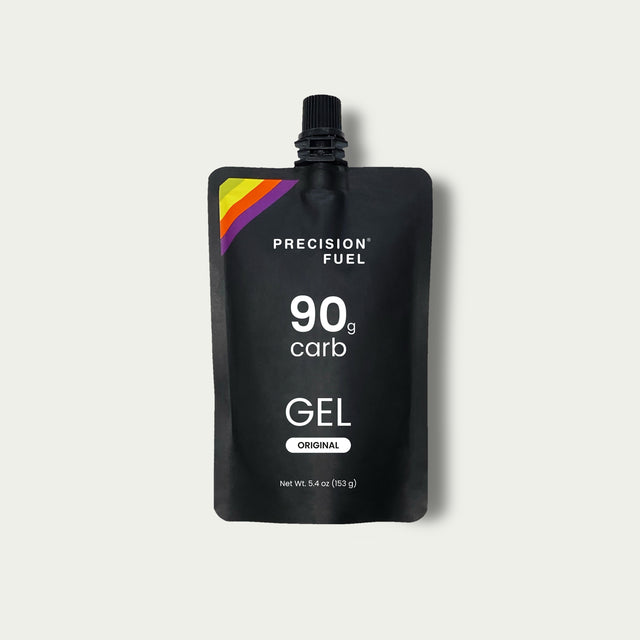
How to do it: choose one base. From your flask: Gel Mix 480 (120 grams in 200 ml of water) or PF 300 Flow Gel (300 grams, a third per hour is 90 grams). From your bottle: Drink Mix 320 (80 grams per 500 ml). Top up from your vest with a PF 90 Gel, a PF 60 Chew or a Gel 100. On an ultra, alternate with solid food and take electrolytes with you, especially in the heat.
What to take: a soft flask or Flow Flask for your base, a bottle for water or Drink Mix, and one thing from your vest per hour. A regular bottle doesn't work for the Gel Mix 480.
Target per hourHow to get there
90 g1 PF 90 Gel, in sips spread over the hour. Or a third of your flask of PF 300 Flow Gel.
105 g1 bottle of Drink Mix 320 (80 g) plus 1 Gel 100 (25 g).
120 g1 full flask of Gel Mix 480. Or half a flask of Gel Mix 480 (60 g) plus 1 PF 60 Chew (60 g) if you want something to chew.

From your flask or bottle

120 grams from one flask

Maurten Gel Mix 480

120 g of carbs per sachet (480 kcal)
Mix with 200 ml of water in a soft flask, can be split into 2 x 60 g
Hydrogel, vegan and Informed Sport certified

€8,99per sachet

View and order
300 grams for the whole day

Precision PF 300 Flow Gel

300 g of carbs per pouch, 2:1 glucose and fructose
Pour into a Flow Flask or Flow Bottle, no water needed
A third per hour is 90 grams, easy to read off the flask

€19,99per pouch

View and order
The base in your bottle

Maurten Drink Mix 320

80 g of carbs per 500 ml bottle
Hydrogel: energy and fluid in one, good in the heat
Vegan and Informed Sport certified

€3,50per sachet

View and order

From your vest

90 grams in one gel

Precision PF 90 Gel

90 g of carbs per pouch, 2:1 glucose and fructose
Resealable cap: spread it in sips over the hour
Mild taste, vegan and Informed Sport certified

€5,95per gel

View and order
Something to chew on

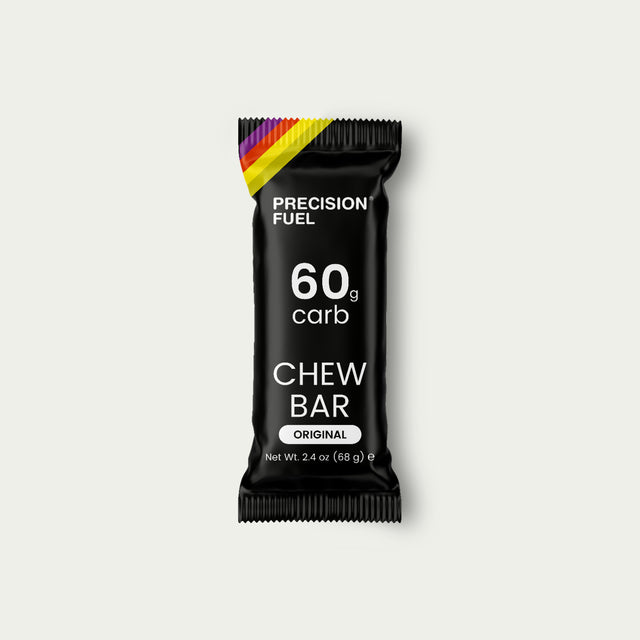
Precision PF 60 Chew

60 g of carbs per 68 gram bar
Solid texture, a welcome change after hours of gels
Original or Mint and Lemon, vegan and Informed Sport certified

€3,99per chew

Choose and order
Spare in your vest

Maurten Gel 100

25 g of carbs per gel, ready to use
Firm hydrogel, can be taken without water
Neutral taste, vegan and Informed Sport certified

€3,25per gel

Choose and order

Torn between two distances? Choose the longer one. There's no such thing as practising your sports nutrition too well.

Step 4: Test

Train your gut and avoid these 5 mistakes

You can train your gut just as well as your legs. Anyone who tries 90 grams per hour for the first time on race day is asking for trouble. Anyone who builds it up on their long runs won't notice a thing after a few weeks.

Here's how to build up. Start with 30 grams per hour on your long run. If that goes well, move to 45, then 60 and, for the marathon, 90. Use exactly the gels you'll use on race day, in the same rhythm. At least 3 to 4 long runs before your race.

The 5 mistakes
Starting too late. Your first gel is an advance, not a rescue. After 20 to 30 minutes, not at kilometre 25.
Something new on race day. That free gel from the expo? Nice for after the finish. Run on what you've tested.
Gels without water. A gel is concentrated. Without a few sips of water it sits heavy in your stomach.
Only glucose at high intakes. Above 60 grams per hour you need fructose, otherwise it lingers in your gut. That's why you should check the carb ratio on the packet.
Fibre and fat just before the start. Tasty, but slow. Save the wholemeal sandwich with peanut butter for afterwards.

Not sure which gel suits your stomach?

Email us. We don't make nutrition plans, but we're happy to help you get started with what suits your distance and your stomach.
Frequently asked questions

All about sports nutrition and running

How many carbs do I need while running?

That depends on how long you run. Under an hour: nothing. 1 to 2 hours: 30 grams per hour. 2 to 2.5 hours: 30 to 60 grams per hour. Over 2.5 hours: 60 to 90 grams per hour, with a mix of glucose and fructose. Build this up on your long runs.

Do I need a gel for a 10 km?

No. Your carb stores are more than enough for an hour of running. Make sure you have a good breakfast 2 to 3 hours beforehand. Still want something? A caffeine gel 15 to 30 minutes before the start, if you've tested it in training.

When do I take my first gel during a marathon?

After 20 to 30 minutes, and then every 20 to 30 minutes. You top up before your stores run low. Waiting until you're tired is too late: you'll spend the rest of the race playing catch-up.

What does the carb ratio on a gel mean, such as 2:1 or 10:8?

The ratio between glucose (or maltodextrin) and fructose. Your gut absorbs a maximum of around 60 grams of glucose per hour. Fructose uses a different route, so in total you can take in 90 grams or more. 2:1 is the classic ratio and works well up to around 90 grams per hour. 10:8 (the same as 0.8:1) is closer to what your gut absorbs best at high intakes. Below 60 grams per hour you'll hardly notice the difference.

Will gels upset my stomach?

Usually not if you do three things: drink water with your gel, build up on your long runs and try nothing new on race day. Still struggling? Then choose a hydrogel such as the Maurten Gel 100 or a sports drink, and spread your grams over more small servings.

Do I need electrolytes?

Not on a run shorter than 2 hours in normal temperatures. In the heat, on long runs or if you're a salty sweater (white streaks on your clothes, cramp), yes. How much varies widely from person to person. One electrolyte tablet per 500 ml bottle is a safe start, then see how you respond.

What do I eat the evening before a half marathon or marathon?

Something familiar that's high in carbs and low in fibre and fat: pasta or rice with a light sauce, not too many vegetables, no big portion of meat. Don't overeat. Breakfast the next morning counts just as much.

What is carb loading and how do I do it?

In the 36 to 48 hours before a marathon you fill your carb stores to the max with 8 to 12 grams of carbs per kilo of body weight per day. You don't eat more, you eat differently: more bread, rice, pasta, juice and sports drink, less fibre and fat. For a half marathon, one day is enough.

Now you know what, when and how much.

The rest is practice. Choose your distance, order what you need and test it on your long run this weekend.

Prefer to browse first? Shop all energy gels. Further reading: The best electrolytes of 2026, which electrolytes suit you and how much you need in the heat and on long runs.