


What are electrolytes? Sodium, sweat and when water is enough
Everything you need to know to use electrolytes well: how much you lose, how to test it yourself and what to do in the heat, with cramp and on long sessions.
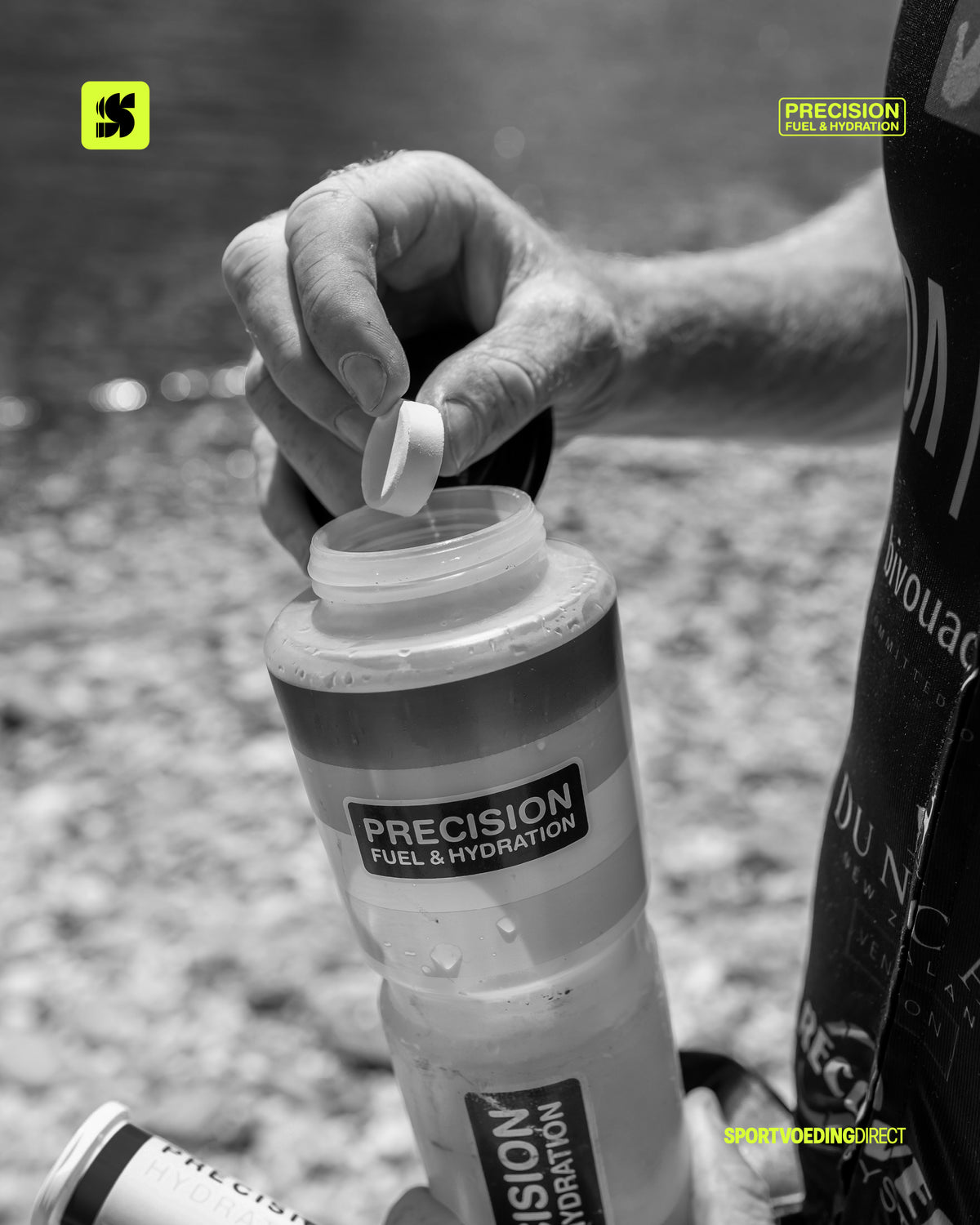
What are electrolytes and what do they do?
Electrolytes are minerals that carry an electrical charge in your body fluids. They regulate how much fluid you hold on to, control your muscles and pass on nerve signals. The four you find in sweat are sodium, potassium, magnesium and calcium.
Only one of them really matters during exercise: sodium. Per litre of sweat you lose many times more of it than of the other three combined. Sodium makes sure the fluid you drink actually stays in your bloodstream, instead of you weeing it out again just as quickly.
So check the label for sodium.
You top up potassium, magnesium and calcium more than enough with normal food. An effervescent tablet with lots of magnesium and little sodium does little for you during a long endurance session.
How much you lose
Two things determine your sodium loss: how much you sweat and how salty that sweat is. Both vary enormously from person to person.
Let's do the maths. A light sweater with little salt in their sweat loses 0.5 litres times 400 mg: 200 mg of sodium per hour. A heavy, salty sweater loses 1.5 litres times 1,500 mg: 2,250 mg per hour. Same session, eleven times the loss. That's why advice that's right for your training partner sometimes doesn't work for you at all.
How salty your sweat is stays pretty much fixed. How much you sweat does change: with temperature, humidity, your pace, your clothing and how well you're used to the heat.
Test how much you sweat
You can measure your sweat loss at home with a set of scales. One kilo lighter means roughly one litre of sweat. Do the test during a one-hour session at race pace, in conditions similar to your goal.
- 1Go to the loo and weigh yourselfWithout clothes, just before you head out. Note your weight to one decimal place.
- 2Train for an hourKeep track of how much you drink. A bottle with measurement marks is easiest. Don't wee along the way, or estimate how much.
- 3Dry off and weigh yourself againWithout clothes again, because your kit is full of sweat.
- 4Do the mathsWeight before minus weight after, plus what you drank, minus any urine you passed. Divide by the number of hours.
Enter your measurements. A comma or a full stop both work.
Enter your measurements and press calculate. Your result will appear here.
This is a starting point, not a personal plan. Test your choice in training first.
Repeat the test once on a cool day and once on a warm day. Then you'll know your range. You don't need to replace everything you lose: the aim is to lose no more than about 2 per cent of your body weight along the way.
Are you a salty sweater?
Exactly how salty your sweat is can only be measured with a sweat test in a lab. But your body gives you plenty of hints. If you recognise three or more, you're probably on the salty side.
These numbers are the concentration in your bottle: milligrams of sodium per litre of water. The packaging shows the sodium per serving. Dissolve one 500 mg serving in 500 ml and you're drinking 1,000 mg per litre.
When to take electrolytes: before, during and after
Drink to thirst and to plan at the same time: use your bottle per hour as a guideline, but don't force yourself to keep drinking if your stomach is sloshing.
Training in the heat
In the heat your sweat loss can double. The 90-minute rule then shifts: in hot conditions, electrolytes already count from one hour.
Cramp: the honest story
Electrolytes are often sold as a remedy for cramp. It isn't that simple. Science has two explanations, and both probably play a role.
Fatigue
Most cramp develops in muscles that work harder or longer than they're used to. Think of the last kilometres of a marathon that's going faster than your training. No bottle will help with that, but specific training and a realistic pace will.
Fluid and sodium
For some athletes, especially heavy and salty sweaters in the heat, cramp clearly decreases when they get their sodium in order.
Do you mainly get cramp in warm weather or at the end of long efforts, and do you recognise yourself as a salty sweater? Then more sodium is worth a try. Do you get cramp during short, intense efforts? Then look at your training and your pace first.
Want to know more? Read cramp when running.
There is such a thing as too much water
If you drink much more than you lose for hours on end, and do it with water alone, you dilute the sodium in your blood. That's called hyponatraemia. It mainly happens at long events at an easy pace, where athletes keep drinking at every aid station just to be safe.
The first signs look like dehydration: headache, nausea, swollen fingers and a bloated feeling. You can see the difference on the scales: you're heavier at the finish than at the start.
Combining with carbohydrates
Electrolytes aren't a sports drink. They provide sodium, not energy. If your session lasts longer than 90 minutes, you also need carbohydrates: plan on 60 to 90 grams per hour, from gels, bars, chews or a drink mix. How to build that up is explained in the carbohydrate guide.
Two ways to sort it out
Separate
Electrolytes in your bottle, carbohydrates from gels or bars. You can adjust drinking and eating independently. Handy in the heat: drinking more then doesn't automatically mean more sugar.
All in one
A drink mix with carbohydrates and sodium together. Simple, but check the label: many drink mixes contain only a little sodium. As a salty sweater, that won't get you through long days.
Two tips. Add up all your sodium, because gels and drink mixes provide a little too. And stick to one brand: the formulations of a brand's sports nutrition are designed to work together, so the concentrations in your stomach are right.
Always test your plan in training. Never try anything new on race day.
Frequently asked questions
What is an electrolyte?
A mineral that carries an electrical charge in your body fluids. The four you find in sweat are sodium, potassium, magnesium and calcium. During exercise, sodium matters most.
Do I get enough electrolytes from my food?
Usually, yes. Regular food provides minerals such as sodium, potassium, calcium and magnesium. Topping up mainly makes sense if you exercise for a long time or intensely and sweat a lot.
Can I just put a pinch of table salt in my bottle?
You can. One gram of table salt contains about 400 mg of sodium, so for 1,000 mg per litre you need 2.5 grams of salt. The downside: weighing it out is a hassle, the taste is disappointing and it's easy to add too much or too little. Electrolytes in tablets, powder or capsules are above all more precise and taste better.
Do I need electrolytes on rest days or at the office?
No. Normal food gives you more than enough sodium. Electrolytes are meant for around exercise, not as a daily supplement.
What's the difference between tablets, powder and capsules?
The format. You dissolve effervescent tablets and powder in your bottle. You swallow capsules with water, handy if your bottle is already filled with a drink mix or if you don't like the salty taste. What matters is the number of milligrams of sodium per serving.
How much sodium is too much?
During long efforts you lose more than you take in, so the guidelines in this guide fit well within that. You'll notice a mix that's too strong straight away: it tastes unpleasantly salty and upsets your stomach. Do you have high blood pressure, kidney problems or a salt-restricted diet? Then consult your doctor first.
Does magnesium help against cramp during exercise?
There's little evidence for that. You lose only a very small amount of magnesium through sweat. If electrolytes make a difference to cramp, it's down to sodium and fluid.
Should I get a sweat test done in a lab?
Not necessarily. With the weigh test and the signs in this guide, you'll get a long way. A lab test is worthwhile if you do long races in the heat, or if you keep struggling with cramp or an empty feeling despite a good plan.
Know what you need?
Browse all electrolytes: tablets, powders and capsules, with the sodium per serving listed.These are general guidelines, not a personal plan. How much you lose depends on your sweat, the weather and the intensity. If you have a medical condition or take medication that affects your fluid or salt balance, consult your doctor. Questions about using your sports nutrition? Email nu@sportvoedingdirect.nl.