





ExoLactate
5.01 review from athletesThe FLF ExoLactate Gel is the first lactate gel, an energy gel with exogenous lactate: 40 g of carbohydrates per gel in a 1:1 glucose-fructose carbohydrate ratio, plus 5 g of lactate.
ExoLactate
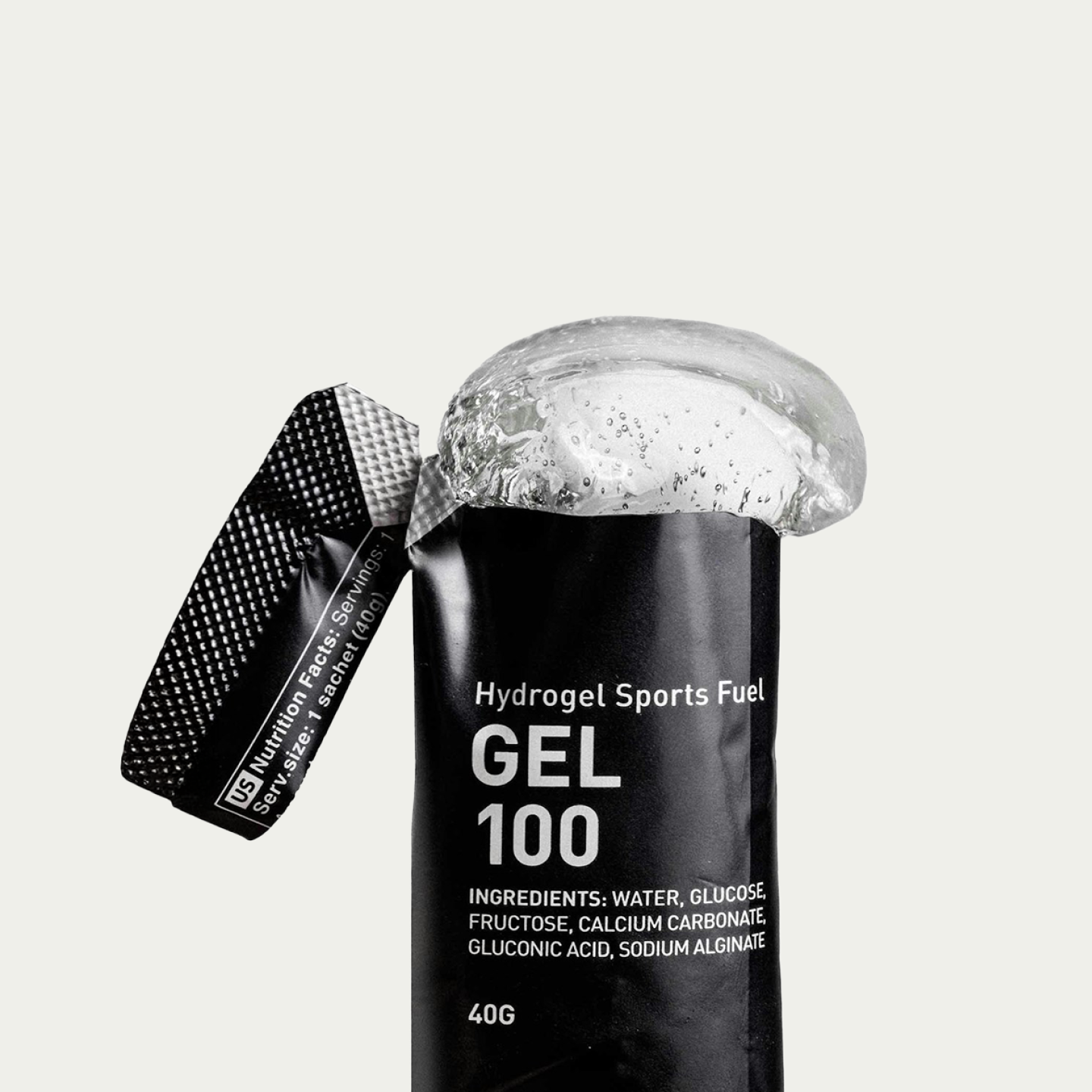
The FLF ExoLactate Gel is the world's first energy gel with exogenous lactate. Each gel delivers 40 grams of carbohydrates in a 1:1 glucose-fructose carbohydrate ratio, plus 5 grams of lactate: a fuel that your body burns faster than carbohydrates and absorbs via its own route. That way you add an extra energy source on top of your usual 90 to 120 grams of carbohydrates per hour, without putting more strain on your gut. Developed by sports physiologist Aitor Viribay and his team at From Lab to Field (FLF) after seven years of research, and already used by a pro team in the 2026 Tour de France. Hydrogel texture with pH 5, mild salted caramel flavour. Available individually and in packs of 6 and 12 gels.
Strengths
- First energy gel with exogenous lactate: 5 grams per gel as extra fuel alongside your carbohydrates
- 40 grams of carbohydrates in a 1:1 glucose-fructose carbohydrate ratio
- Hydrogel texture with pH 5: kind to your stomach and teeth
- Mild salted caramel flavour with no added flavourings or preservatives, so you won't tire of it
- Works within 5 to 10 minutes of taking it
- Can also be dissolved in your bottle or soft flask (250 to 500 ml)
- 284 mg of sodium and 100 mg of magnesium per gel
- Informed Sport certified (every batch tested for banned substances)
Good to know
- Premium price per gel compared with a standard energy gel
- Large gel (68 g): build up gradually and train your gut over 4 to 6 sessions
- Research into exogenous lactate is still young, and the effect varies from athlete to athlete
- Take care if you have fructose intolerance
How to use
ExoLactate
- 01DosageTake a gel every 20 to 30 minutes, 1 to 3 per hour depending on intensity, duration and what your stomach can handle. Do not exceed the recommended daily dose.
- 02TimingLactate works within 5 to 10 minutes. So take the gel just before the moment you need it: the foot of a climb, an interval or the tough final part of your race.
- 03As a gel or in your bottleYou can take it straight, without water. Or dissolve 1 to 2 gels in 500 ml and combine energy and fluid in a single sip, as many pros do in a soft flask.
Always test your sports nutrition in training first, so you know what works on race day.

What's
inside
All values per gel (68 g).
- Energy
- 171 kcal
- Carbohydrates
- 40 g
- Carbohydrate source
- Maltodextrin, Fructose, Lactate
- Carb ratio
- 1:1
- Sodium
- 284 mg
- Caffeine
- None
- Texture
- Hydrogel
- Serving
- 1 gel (68 g)
- Allergens
- None
- Certification
- Informed Sport
Nutrition
| Nutrition | Per gel (68 g) | Per 3 gels (204 g) |
|---|---|---|
| Energy | 726 kJ / 171 kcal | 2,179 kJ / 513 kcal |
| Fat | 0 g | 0 g |
| of which saturates | 0 g | 0 g |
| Carbohydrate | 40 g | 120 g |
| of which sugars | 21.9 g | 65.7 g |
| Protein | 2.6 g | 7.8 g |
| Salt | 0.7 g | 2.1 g |
| Lactate | 5 g | 15 g |
| Sodium | 284 mg | 852 mg |
| Magnesium | 100 mg (26% RI) | 300 mg (78% RI) |
| Calcium | 85 mg (11% RI) | 255 mg (33% RI) |
| Potassium | 104 mg (5% RI) | 312 mg (15% RI) |
Ingredients
Fructose, maltodextrin, water, lactic acid (acid), L-arginine, magnesium lactate, sodium bicarbonate (acidity regulator), calcium lactate, iota-carrageenan, potassium bicarbonate (acidity regulator).
Learn more
What is lactate and why isn't it a waste product?
Almost every athlete has been taught it: lactic acid is the culprit. It is said to make your muscles acidic, make your legs heavy and force you to drop off. That picture is wrong. Lactate (the form in which lactic acid occurs in your body) is one of the most important fuels your body has.
The lactate shuttle
Your muscles produce lactate during every effort, even at an easy pace. That lactate doesn't disappear as waste, but travels through your blood to places that can burn it straight away. Your heart prefers lactate to any other fuel. Your brain draws energy from it during hard exercise. Other muscle fibres take it up and burn it. And your liver converts lactate back into glucose. This continuous transport is called the lactate shuttle, a model that Professor George Brooks (University of California, Berkeley) introduced in the eighties and that is now the basis of modern exercise physiology.
So where does the acidity come from?
The burning sensation in an all-out effort is caused not by lactate itself, but by hydrogen ions (H+) that are released when your muscles produce energy at high speed. Lactate is formed at that same moment, but it actually helps you to keep producing energy when things get tough. The fact that lactate and acidity always show up together explains why they were confused for so long.
Endogenous versus exogenous
Lactate that you produce yourself is called endogenous lactate. It comes at a high price: you have to work hard for it, and that costs glycogen. Exogenous lactate comes from outside, in this case from the gel. So you get the fuel without the effort it normally takes. That idea isn't new: researchers have been trying it for decades. The problem was always that lactate in useful amounts was hard to tolerate. FLF has found a solution to this with its own (patent-pending) formulation, and the ExoLactate Gel is the first product in which it works.
How does the ExoLactate Gel work in your body?
A third gateway alongside glucose and fructose
Your gut absorbs glucose and fructose via different transporters. That's why a carbohydrate ratio of 2:1 or 1:0.8 works so well: you use both routes at once and reach 90 to 120 grams of carbohydrates per hour. Above that limit, it stops. More carbohydrates no longer deliver extra energy, only stomach problems. Lactate uses a third route, the MCT transporters, so it doesn't run into the same ceiling. With the ExoLactate Gel you add an energy source without putting extra strain on your gut.
Available faster than carbohydrates
Carbohydrates first have to be broken down into glucose before your muscles can do anything with them. Lactate skips that step: it can enter the mitochondria, the powerhouses of your cells, almost directly. As a result, lactate is available as fuel just 5 to 10 minutes after you take it. That makes the gel suitable for timing precisely before a climb, an acceleration or the final part of your race.
What happens after you take it?
The lactate from the gel is absorbed in your gut and enters your blood. From there, the same thing happens as with your own lactate: it flows into the lactate shuttle and is used as energy by your heart, muscles and brain. According to FLF, lactate works in two ways here. At an easy pace (zone 2) it supports fat burning, so you save your glycogen for later. At high intensity it supports carbohydrate burning instead, exactly when you need that energy fast. Lactate is also a signalling molecule: it gives your cells a cue to adapt to training.
Hydrogel with pH 5
Most energy gels are fairly acidic (pH 3 to 4), which is hard on your teeth and stomach. The ExoLactate Gel is a hydrogel with pH 5: gentler on your teeth and easier to tolerate during long efforts. The hydrogel structure also ensures fast gastric emptying. The mild salted caramel flavour with no added flavourings prevents flavour fatigue after hours on the bike or in your running shoes.
How to use the ExoLactate Gel
The ExoLactate Gel doesn't replace your carbohydrates, but fits in with them. The simplest way: stick to your current carbohydrate strategy and, within it, replace one or more regular gels with an ExoLactate Gel. Start with 1 or 2 gels per hour and build up.
Guideline by intensity
| Intensity | Gels per hour | What you take in | Suitable for |
|---|---|---|---|
| Easy (zone 2) | 1 to 2 | 40 to 80 g of carbohydrates, 5 to 10 g of lactate | Endurance sessions, long easy rides. Here, lactate supports fat burning. |
| Intense (tempo, race) | 2 to 3 | 80 to 120 g of carbohydrates, 10 to 15 g of lactate | Marathons, sportives, triathlons and interval sessions. Only with a trained gut. |
| Pro level | More than 3 | 160 g of carbohydrates or more, 20 g of lactate or more | Tour de France, Ironman and ultra trails for elite athletes. Do not copy this without professional guidance. |
Practise your protocol in 4 to 6 training sessions before you race with it. Your gut needs to get used to the combination of 40 grams of carbohydrates and 5 grams of lactate per gel, just as with any high carbohydrate intake.
What does the research say?
Behind the ExoLactate Gel are sports physiologist Aitor Viribay (known for research into high carbohydrate intakes of 120 grams per hour), Dani Lasa (for years head of gastronomic research at the top Spanish restaurant Mugaritz) and Juan Carlos Arboleya (biochemist, Basque Culinary Center). Seven years of research and three years of product development preceded the first gel.
FLF's results
According to FLF's own tests, athletes lasted up to 3% longer in a test to exhaustion when lactate was added to their carbohydrates, compared with carbohydrates alone. Perceived exertion fell by around 10% at the same power output, and fat burning at moderate intensity rose by around 12%. In the 2026 Tour de France, a pro team was already riding with the gel, even before it went on sale.
Honest about the state of the science
That lactate is a fuel and not a waste product is scientifically well established. So is the fact that your heart, brain and muscles burn lactate. What is still young is the research into lactate that you take in during exercise. The figures above come from the manufacturer's own research; there are no independent studies with this product yet. The effect may also vary from athlete to athlete. Our tip: try the gel in a few training sessions and pay attention to your power, how you feel and your stomach. Then you'll know for yourself whether it works for you.
Sources: Brooks GA, The Science and Translation of Lactate Shuttle Theory, Cell Metabolism 2018. Brooks GA, Lactate as a fulcrum of metabolism, Redox Biology 2020. Brooks GA, What the lactate shuttle means for sports nutrition, Nutrients 2023. Koep JL et al., Preferential lactate metabolism in the human brain, Journal of Physiology 2025.
Comparison with other leading brands
Curious how the FLF ExoLactate Gel compares with other gels with 40 grams of carbohydrates? Below is an honest comparison of the main features.
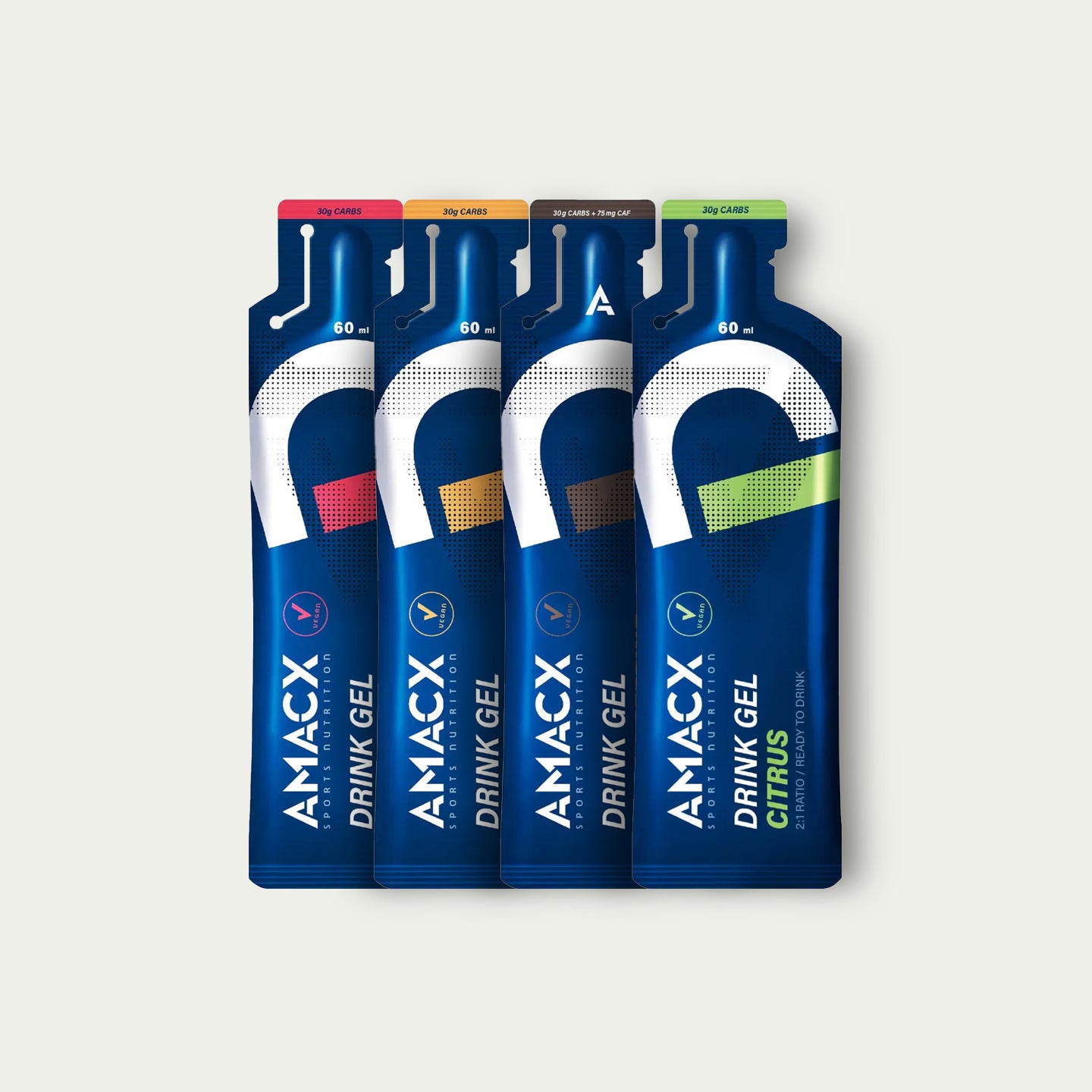
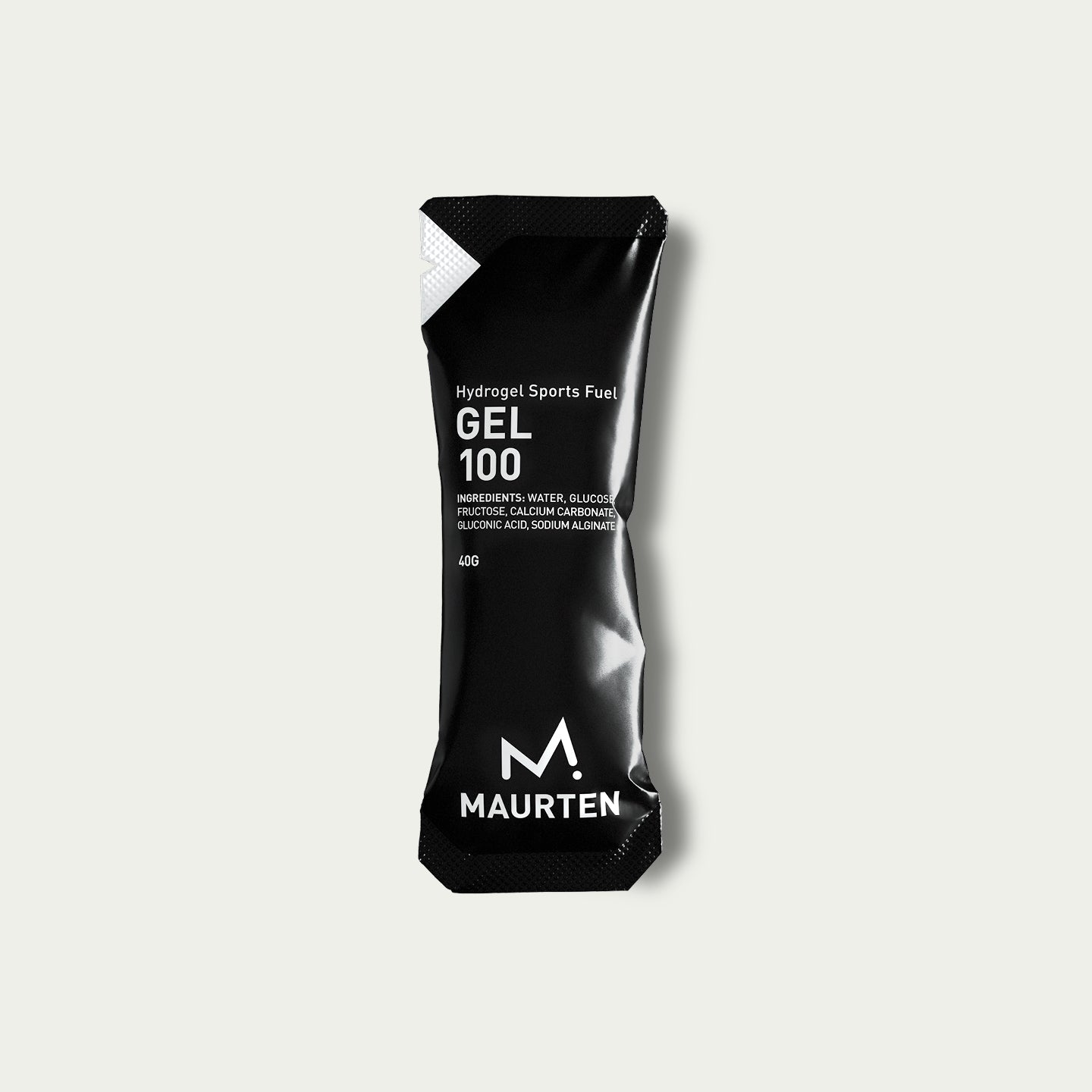
| Feature | FLF ExoLactate Gel | Maurten Gel 160 | Amacx Turbo Drink Gel |
|---|---|---|---|
| Texture | Hydrogel, pH 5 | Hydrogel | Isotonic, drinkable |
| Carbohydrates | 40 grams | 40 grams | 40 grams |
| Lactate | 5 grams | No | No |
| Carbohydrate ratio | 1:1 (glucose:fructose) | 0.8:1 (fructose:glucose) | 1:0.8 (glucose:fructose) |
| Flavour | Mild salted caramel, no added flavourings | Neutral, no flavourings | Various fresh flavours |
| Water needed? | No, also dissolves in a bottle | No, not needed | No, not needed |
| Electrolytes? | Yes (284 mg sodium, 100 mg magnesium) | Minimal | Yes (sodium) |
| Doping-free certificate | Informed Sport | Informed Sport | Informed Sport |
| Used by top athletes? | Yes (pro team in the 2026 Tour de France) | Yes (world-class athletes in marathon running and cycling) | Yes (incl. Team Visma | Lease a Bike) |