


Carbohydrates
High-carb sports nutrition with 40 g or more per serving. Gels, drinks, chews and bars for high hourly targets, in the 2:1 and 1:0.8 ratios.



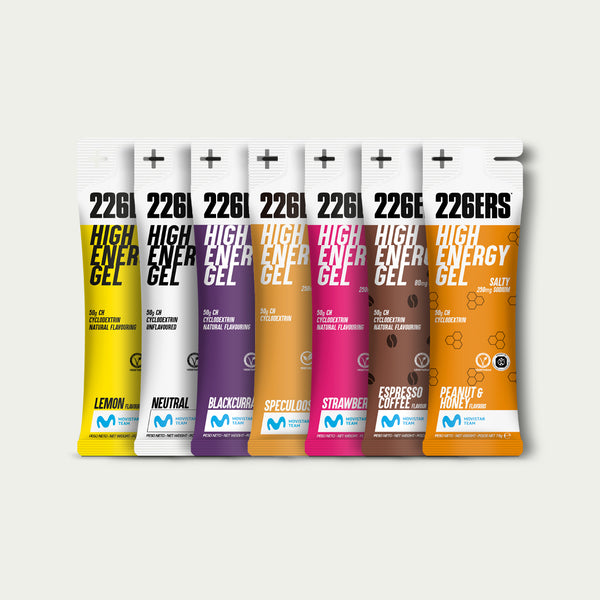
No products match this filter.
Where do you get your carbs from?






Three things to know
Per hour
The race standard for endurance athletes.
Maximum
Achievable with the 1:0.8 ratio and a trained gut.
Absorption routes
Glucose and fructose are absorbed separately.
Start fuelling in the first hour and stick to a fixed schedule, not to how you feel.
Learn more
Why carbohydrates
Carbohydrates are the fuel for endurance sport: the harder you go, the more your body relies on them. Your own stores (glycogen) are limited, though, and run out after roughly 60 to 90 minutes of hard exercise. If you want to keep performing for longer, you have to refuel on the move. Above you'll find all our carbohydrate sports nutrition in one overview: energy gels, sports drinks, chews and energy bars from Maurten, Amacx, Precision Fuel & Hydration and Enervit, in both ratios. Below you'll read how your fuel tank works, how many grams per hour you need, which format suits which moment and how to get the most out of your carbs with gut training and carb loading.
Pros
- Fast carbs are instantly available as fuel for your muscles
- Refuelling delays fatigue and helps you avoid the bonk, even deep into your race
- Use both absorption routes: with glucose plus fructose you can reach up to 120 grams per hour
- Four formats that combine freely: drinks as your base, gels and chews for pace, bars for the easier hours
- Both ratios fully in stock: 2:1 up to 90 grams and 1:0.8 up to 120 grams per hour
- The big brands independently tested for banned substances: Informed Sport and Doping Free
Good to know
- Above 60 grams per hour you need a trained gut: build up your intake over weeks
- Keep products with the same carbohydrate ratio together for the best absorption
- For efforts under an hour you usually don't need extra carbs
- Carbs provide energy, not fluid or salts: plan your hydration and electrolytes separately
Why carbohydrates? Your fuel tank explained
Your body has two fuels: fat and carbohydrates. Fat is available in almost unlimited supply but releases its energy slowly; carbs are the fast fuel you need as soon as the intensity rises. That fast fuel is stored as glycogen in your muscles and liver, but the tank is small: during hard exercise it's empty after roughly 60 to 90 minutes.
You'll recognise an empty tank straight away: your pace drops, everything feels heavy and your mind goes blank. Runners call it hitting the wall, cyclists call it the bonk. The point of sports nutrition is simple: by taking in 30 to 120 grams of carbs per hour during exercise, you spare your glycogen and push that moment back until well after the finish. That's why every good nutrition plan starts not with the products but with one question: how many grams per hour am I going to take in?
The 2:1 and 1:0.8 ratios: using two absorption routes
Your gut absorbs carbs via two routes: glucose via the SGLT1 transporter and fructose via GLUT5. With glucose alone, absorption tops out at around 60 grams per hour. Adding fructose opens up the second route, and that intake comes on top. The ratio of glucose to fructose sets your ceiling.
| Feature | 2:1 ratio | 1:0.8 ratio |
|---|---|---|
| Fructose share | 33% of the carbs | 44% of the carbs |
| Maximum absorption | Up to 90 g per hour | Up to 120 g per hour |
| Who it's for | The proven standard for almost every endurance athlete | Goal races and athletes with a trained gut |
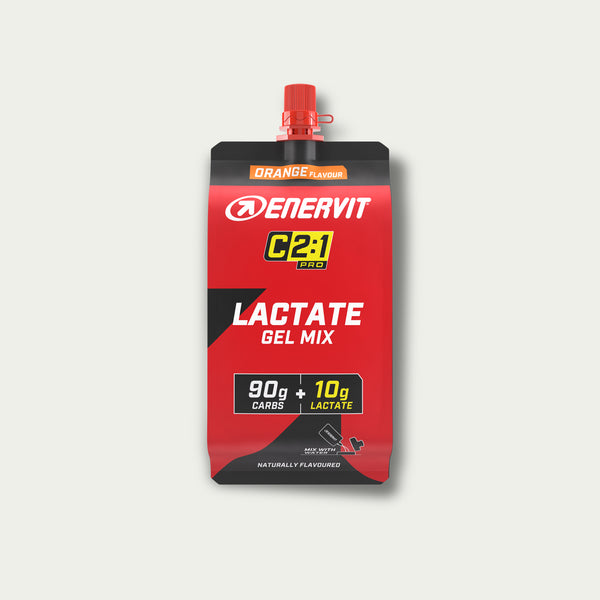
| Examples | Amacx Energy Line, Precision PF range, Enervit C2:1PRO | Maurten, Amacx Turbo Line, Pillar |
Practical rule: keep products with the same ratio together in your plan. Within a ratio you can combine formats and brands freely, because your total glucose and fructose intake per hour determines absorption.
Drink, gel, chew or bar: every format has its moment
All four formats deliver the same fuel and add up in your hourly plan. The difference is in how you take them and when they work best.
| Format | Carbs | Best moment |
|---|---|---|
| Sports drink | 30 to 90 g per bottle | The base of your plan: a steady supply of energy and fluid at the same time, from isotonic drinks to high-carb mixes. |
| Energy gel | 20 to 55 g per gel | The whole course and especially the finale: absorbed straight away, even at a high heart rate. Isotonic drink gels and hydrogels need no water. |
| Energy chew | Around 30 g per pack | Variety halfway through: you dose them block by block, and they give you a welcome chewing break between gels. |
| Energy bar | 22 to 40 g per bar | The easier hours: solid food that keeps hunger at bay, ideal on the bike and on long days out. Switch back to gels for the finale. |
Worked example for 90 grams per hour: an isotonic bottle (30 g) plus a gel (30 g) plus a pack of chews or a bar (30 g). With a high-carb bottle of 80 to 90 grams you hit the same target with hardly any extra products.
Gut training and carb loading: how to raise your intake
Gut training: your gut is trainable, just like your legs. Try 90 grams per hour without building up and you'll almost certainly get stomach trouble; build up step by step and your gut adapts. Start at your current comfortable level and increase your intake gradually over several weeks, always during your long sessions. Use the products and the ratio you'll also use in your race.
Carb loading: besides refuelling during the race, you also want to start with a full tank. The usual guideline for races from about 90 minutes: in the last 36 to 48 hours, eat plenty of carbs (as a guideline 8 to 12 grams per kilo of body weight per day) and keep it low in fibre, so your stomach stays settled. Think white rice, pasta, bread and ripe bananas instead of wholegrain and raw vegetables.
Treat your last long ride or run as a dress rehearsal: same breakfast, same products, same intake per hour as on race day. What works there will work when it counts.